
Microalgae in the Eastern Mediterranean
Israeli coast | Western Mediterranean
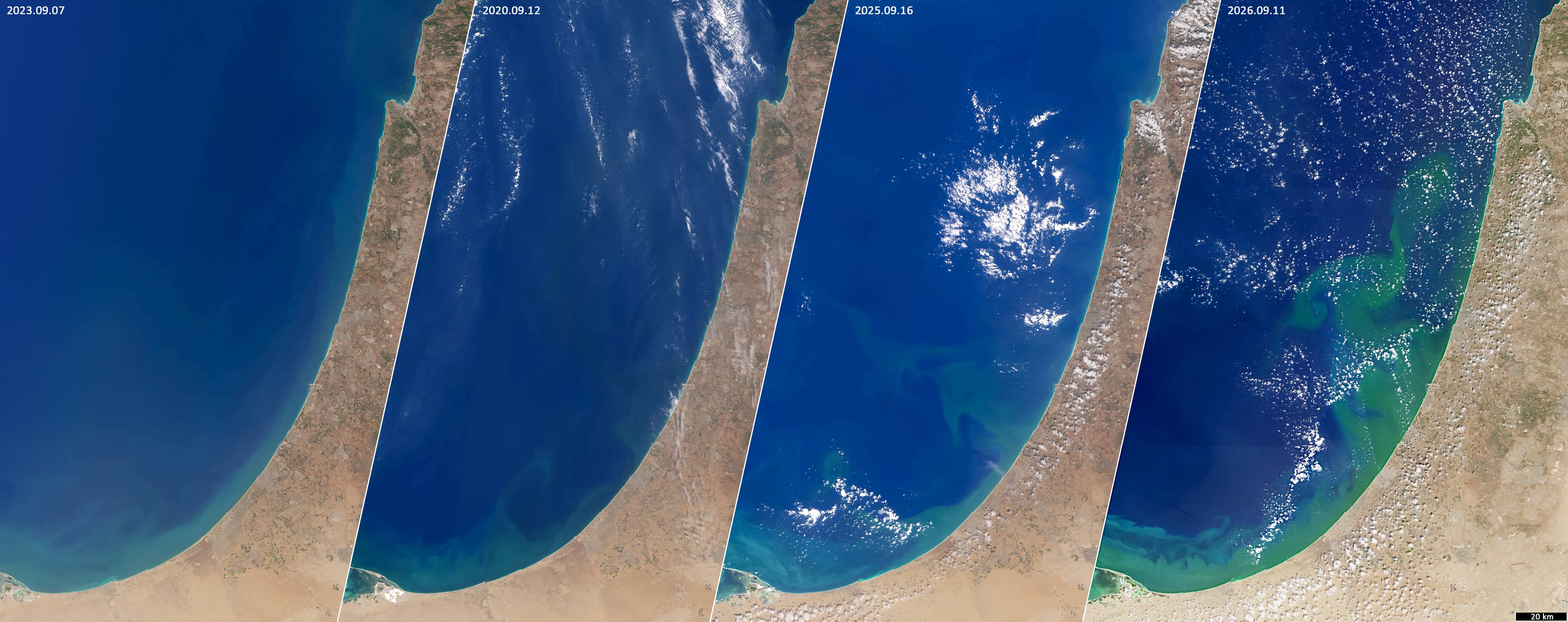
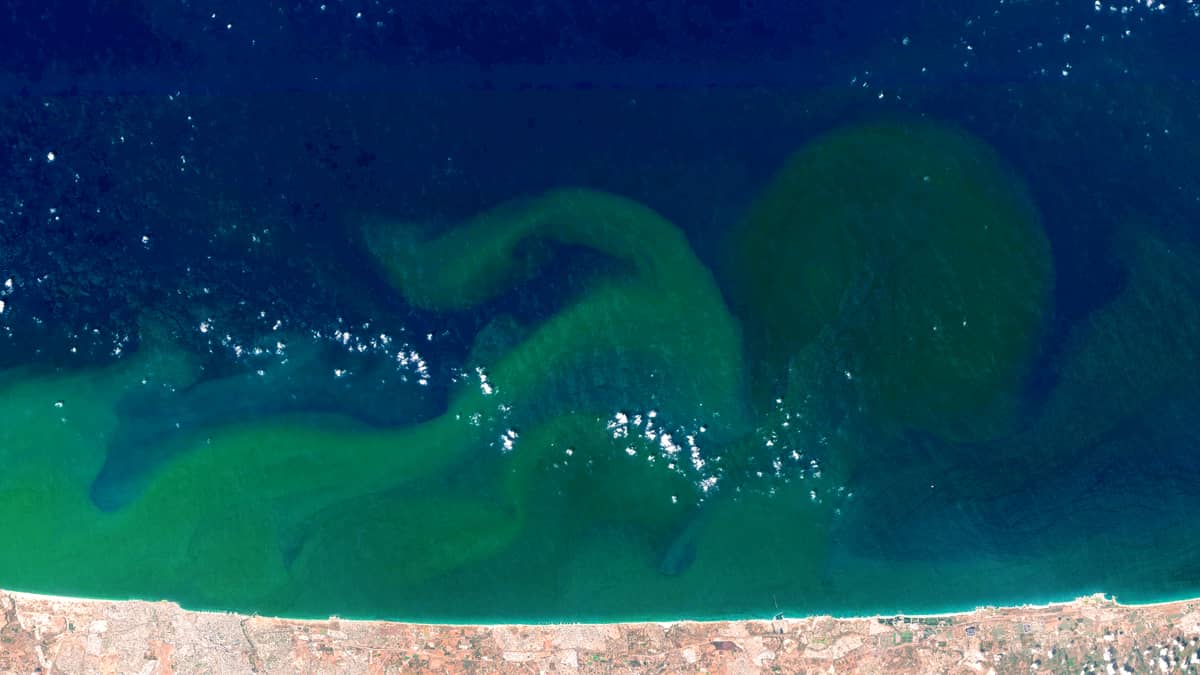
• 2026.09.11 08:16:01 UTC Sentinel-2C L2A
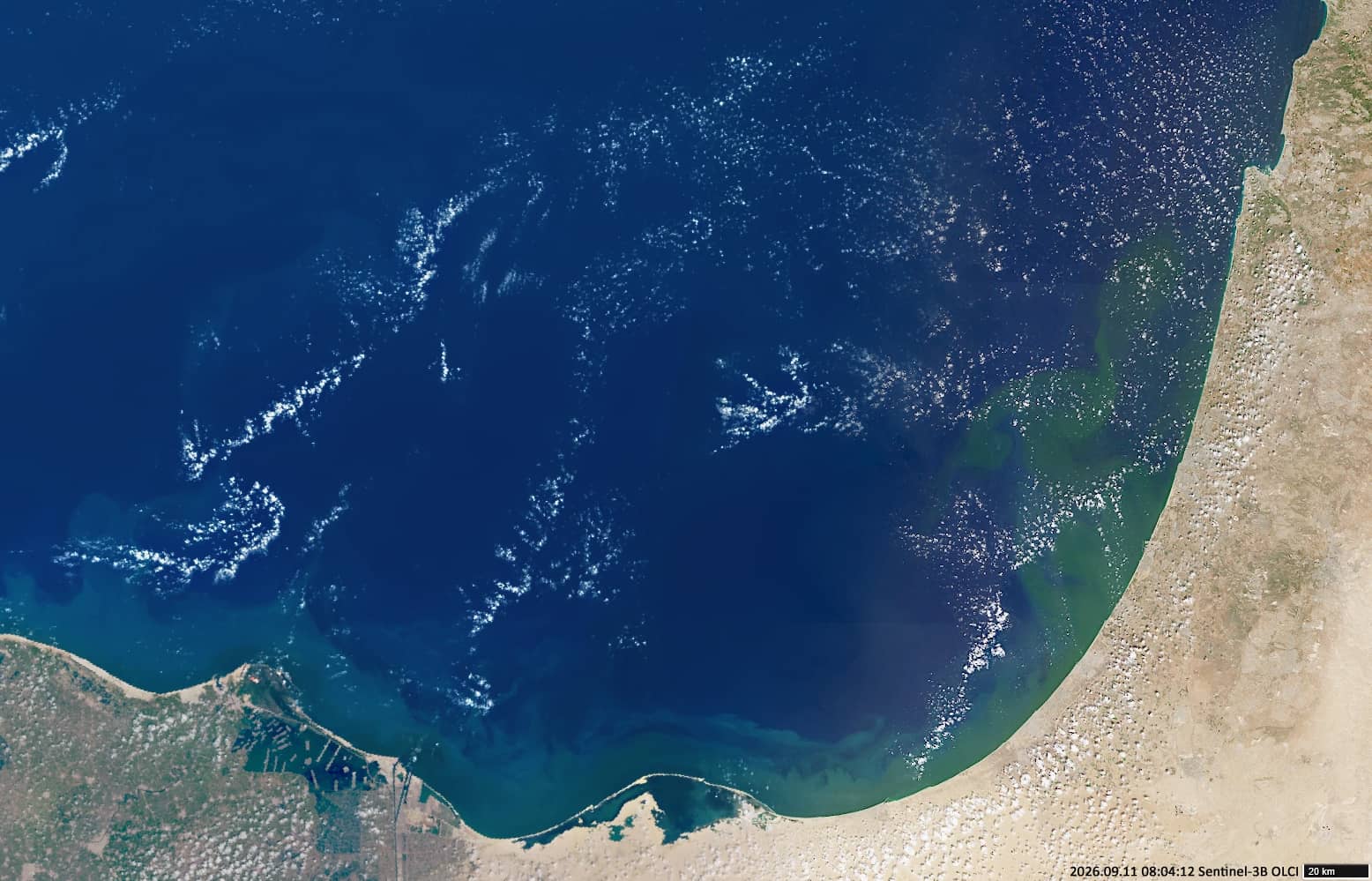
• 2026.09.11 08:04:12 UTC Sentinel-3B OLCI
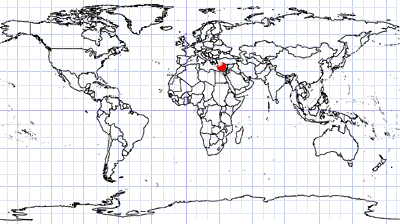
Coordinates: 32°N, 34.4°E | MGRS: 36SXA 32 41
In late August and early September, an unusually extensive microalgal bloom occurred in the eastern Mediterranean Sea, originating from the Nile Delta.
The Nile Delta is a key provider of nutrients for the surrounding waters. This nutrient enrichment, together with regional environmental conditions, can stimulate the growth of phytoplankton. The bloom subsequently travelled northwards along the Levantine coast due to Mediterranean currents (Figure 1).
The algal plume extended over a large area, with elevated concentrations up to 15 kilometres from the coast and the affected water layer reported to reach a thickness of approximately 20 metres.
This unusually intense bloom caused severe seawater turbidity and temporarily disrupted Israel’s desalination infrastructure. Five of the country’s six major desalination plants on the Mediterranean were affected, highlighting the vulnerability of coastal water supplies to such events.
The eastern Mediterranean is experiencing long-term warming, while nutrient and pollutant inputs continue to impact its coastal waters; conditions that increase the probability of such large-scale algal bloom events. (Figure 2).
Further reading
Mass concentration of Chl a in sea water (Copernicus Marine MyOcean Viewer, 6 September 2026)
‘Extremely rare event:’ Miles-long microalgae bloom knocks out most of Israel’s desalination plants (CNN Climate)
Nile Delta algae suspected in shutdown of five Israeli desalination plants (ynet Global)
Nile Delta microalgae to blame for desalination shutdown (Times of Israel)