
Small Taymyr Mystery
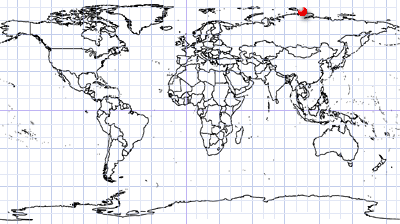
Northern Krasnoyarsk Region | Northern Siberia/h4>
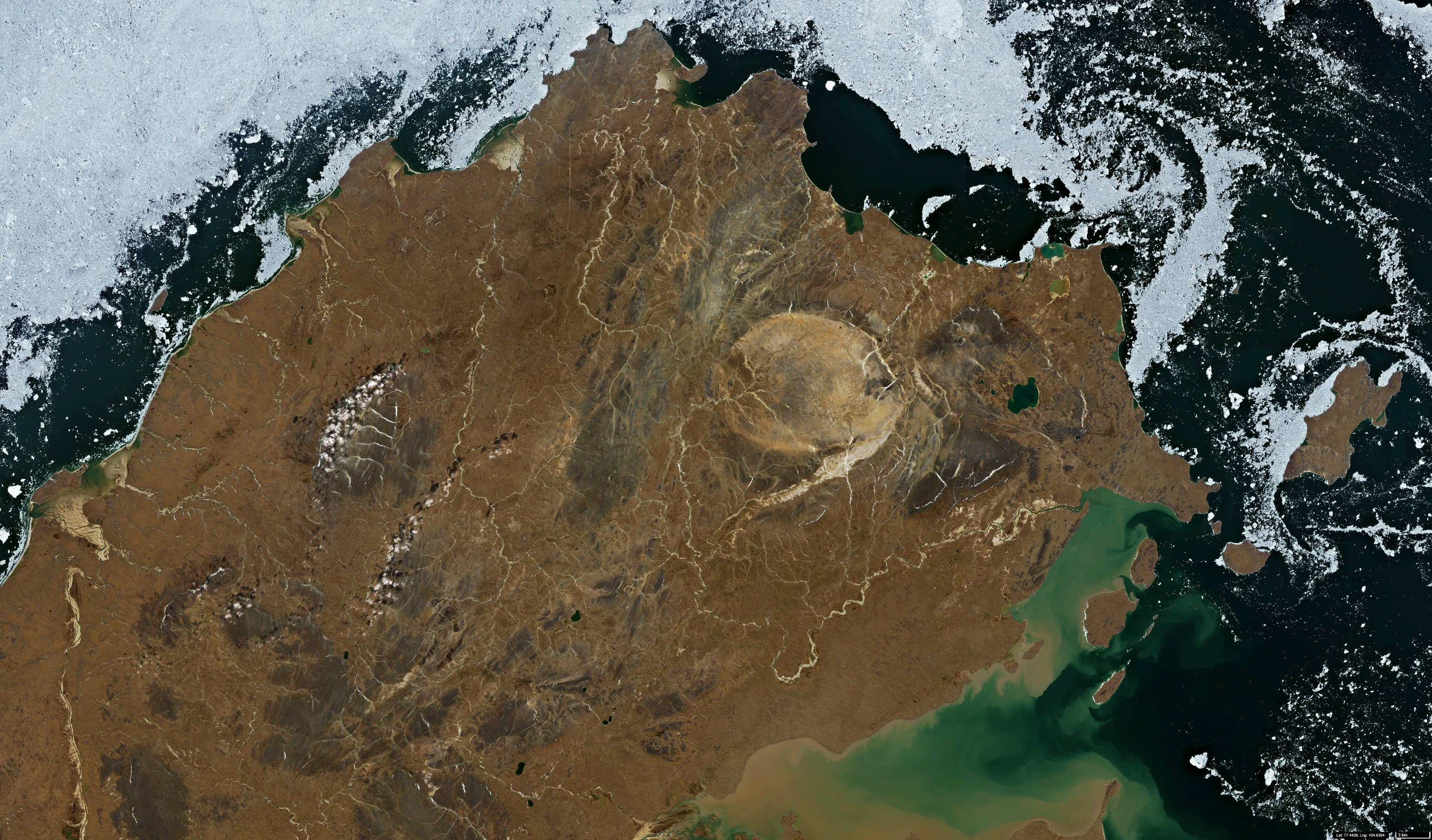
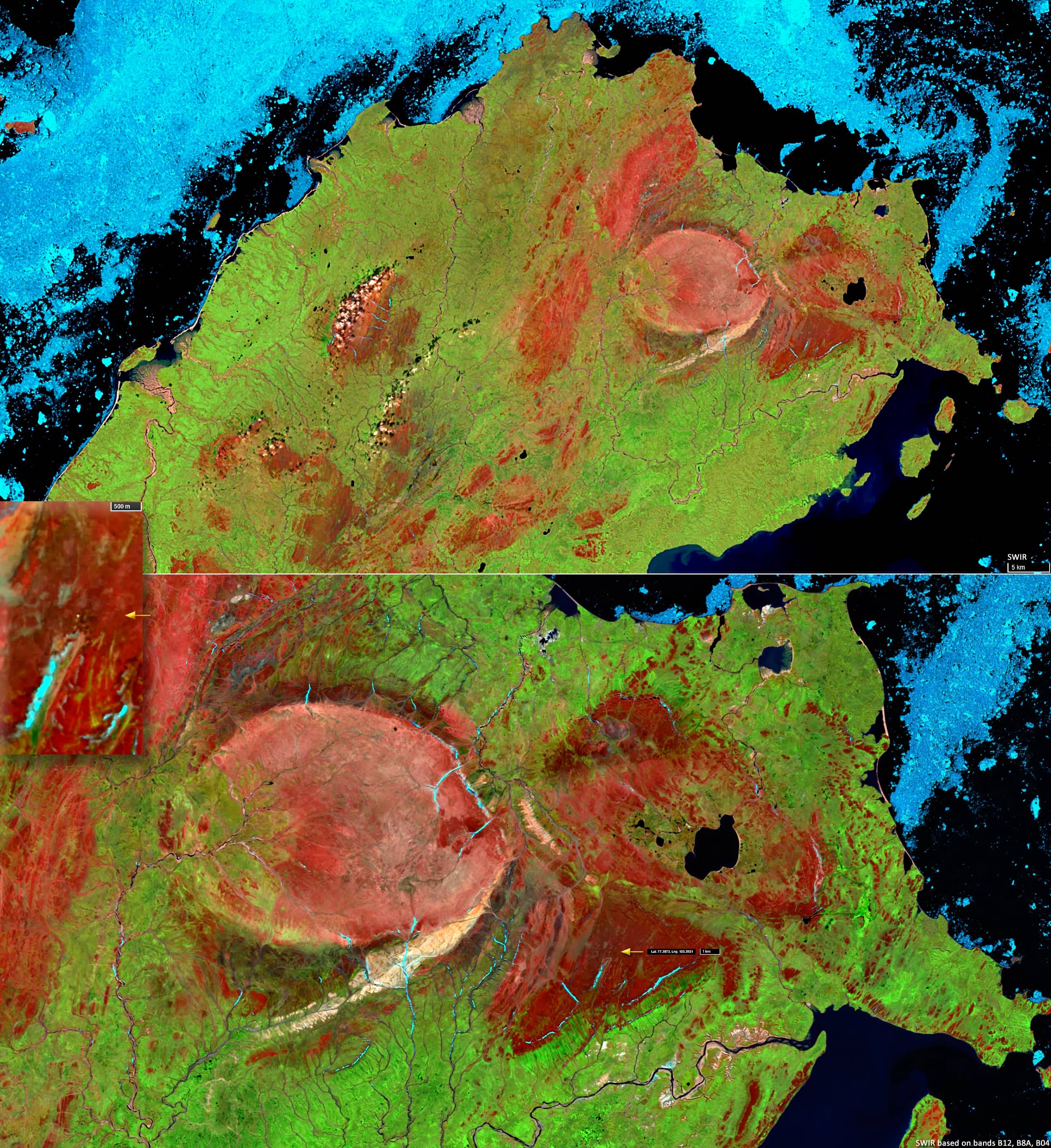
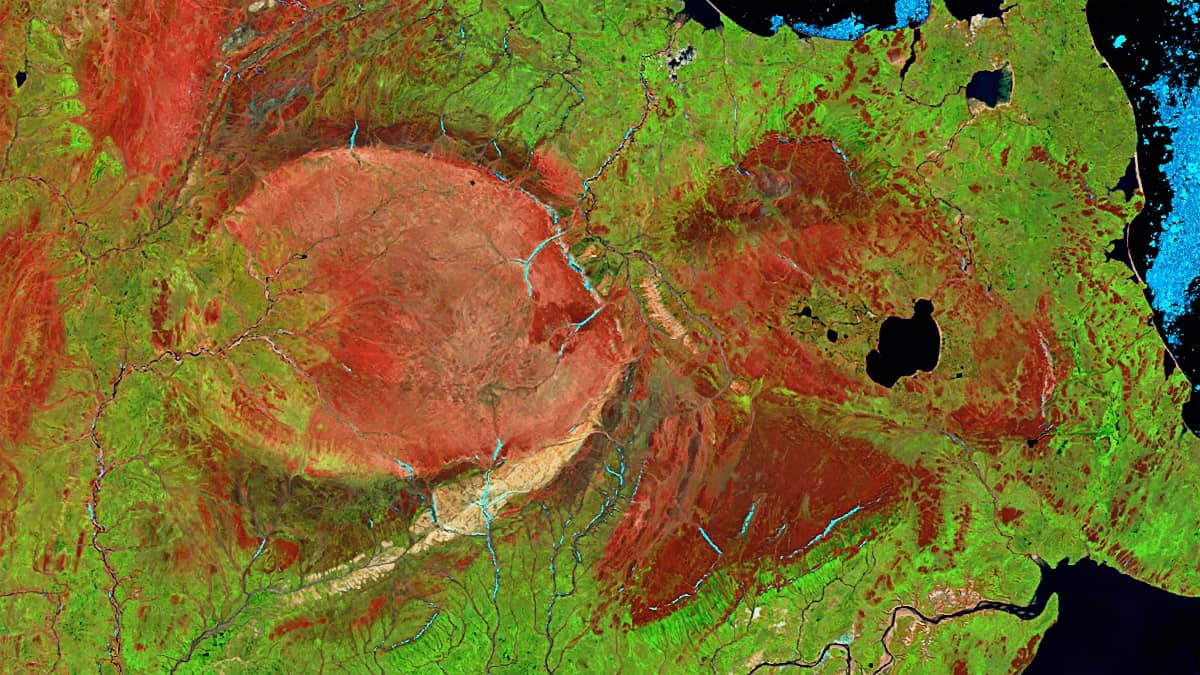
In the far north of the Taymyr Peninsula, well beyond the Arctic Circle, an unusual, oval-shaped mountain (16 km × 12 km, ~148 km²) can be spotted Figure 1). Its shape is particularly distinctive in the SWIR range (Figure 2).
This is Mount Kristifensen , an isolated massif up to 303 m high, composed of porphyritic biotite granites. It was named in 1919 by the Norwegian polar explorer Roald Amundsen during his expedition aboard the Maud, in honour of the expedition’s sponsor.
Modern research tentatively classifies the rocks of this massif as Triassic granites associated with plume-related magmatism. A porphyry-type copper-molybdenum-gold occurrence is also known in the vicinity.
In 1979, a ski expedition discovered the wreckage of a passenger aircraft on a low plateau approximately 6-7 km southeast of the mountain. The accident apparently occurred around the late 1940s or early 1950s. Although the aircraft made a hard landing, there appear to have been no fatalities. The largely intact fuselage was left at the crash site because the necessary means to recover it were unavailable.
The expedition photographed the wreckage and marked its location on a rather rough map.
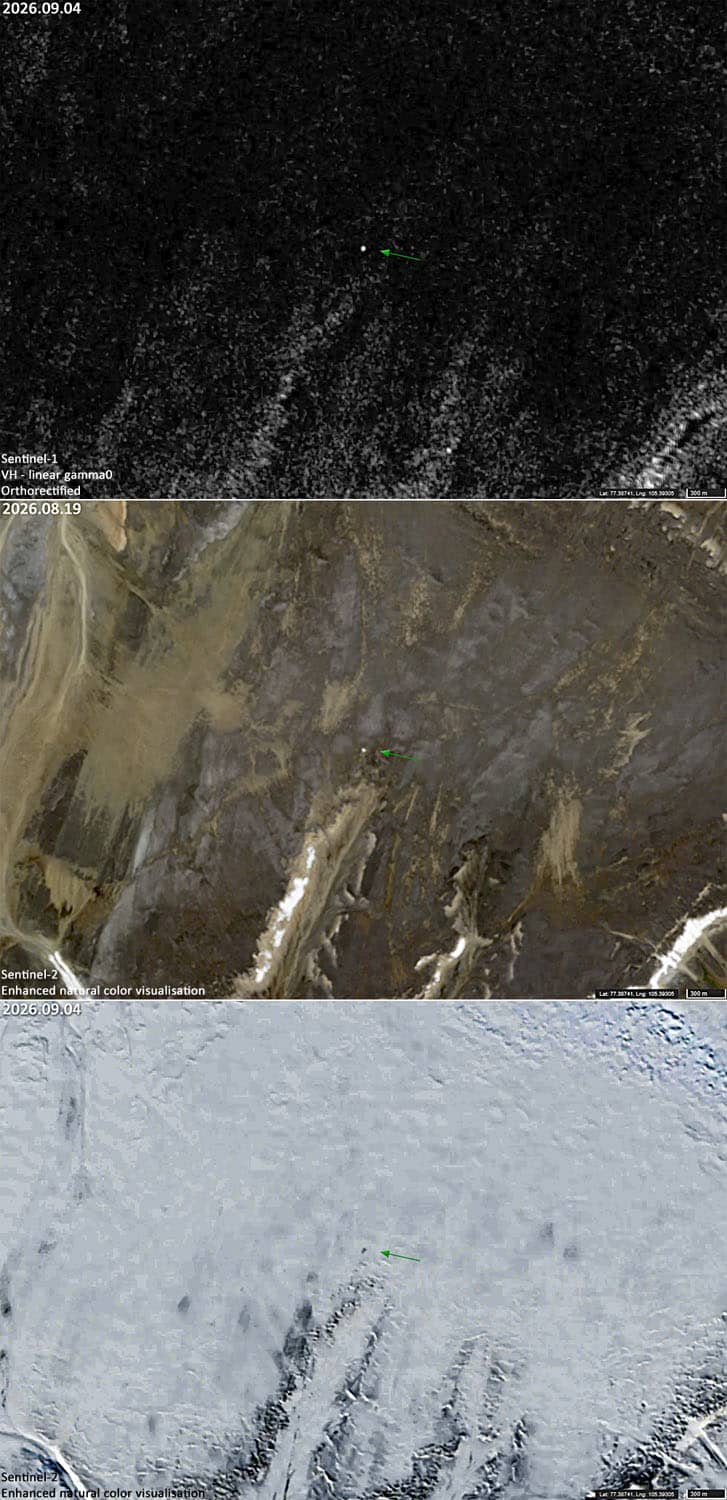
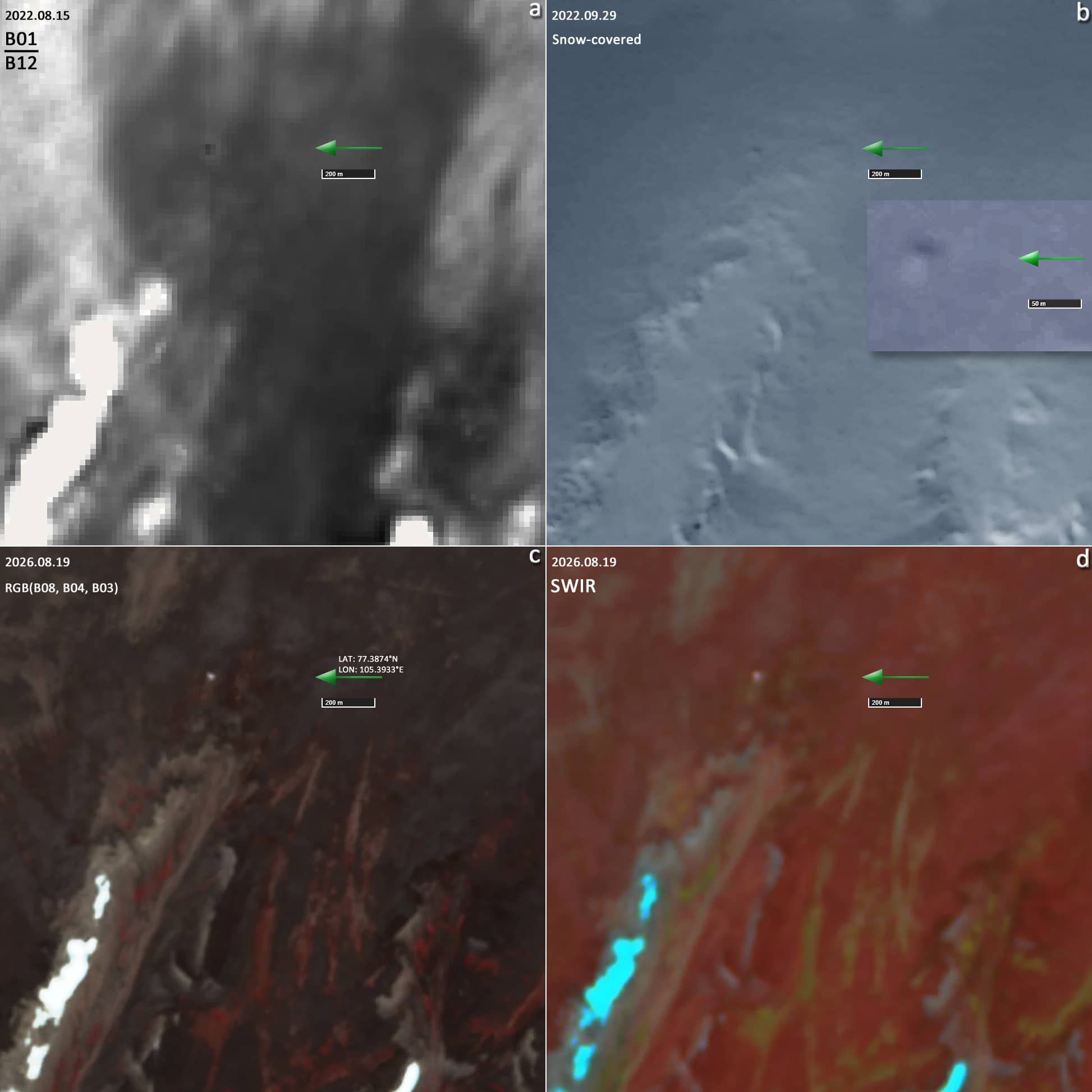
While examining Sentinel-1 SAR images of thecrash area, a small, isolated hill was discovered. During summer, this location produces an unusually bright anomaly in SAR VH polarization throughout the entire Sentinel-1 observation period. The hill also shows an unusual spectral response in Sentinel-2 imagery (Figure 3). In in July and August, it is often noticeably brighter than the surrounding surface in the visible range, even though bands B11 and B12 show no snow on the hill. Its B01/B12 ratio also differs markedly from that of neighbouring snow-covered peaks (Figure 4).
However, no link has yet been confirmed between this anomaly and the aircraft wreckage.
Further reading
Taimyrhalbinsel (Wikipedia, German)
A Case Study from an Emerging Metallogenic Province in the Taimyr Peninsula (MDPI Minerals)