
Kashagan Oil Field, Island D
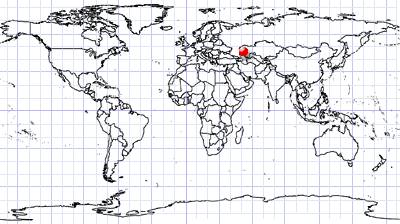
Northern Caspian Sea | Kazakhstan
Dates of acquisition:
• 2026.04.04 | 07:26:19 UTC
• 2026.03.25 | 07:26:09 UTC
• 2025.11.25 | 07:31:39 UTC
• 2025.05.04 | 07:26:41 UTC
• 2025.04.26 | 07:30:21 UTC
Sensor: Sentinel-2 A, B, C L2A
Coordinates: ca. 46.438°N, 52.268°E | MGRS: 39TWM 97 43
Kashagan (Kazakh: Қашаған / Russian: Qaşağan) is a vast offshore oil and gas field located in the northern part of the Caspian Sea, located in the offshore extension of the Karaton–Tengiz uplift zone. The hydrocarbon accumulation is associated with stratigraphic units from the Permian, Carboniferous, and Devonian periods. The reservoir lies beneath a salt dome estimated to be 1.5-2 km thick.
Discovered in 2000, the field represents one of the world’s largest hydrocarbon discoveries worldwide of the past four decades. It is being developed using artificial islands.
The Kashagan field’s geological reserves are estimated to be around 4.8 billion tonnes of oil and over 1 trillion cubic meters of natural gas.
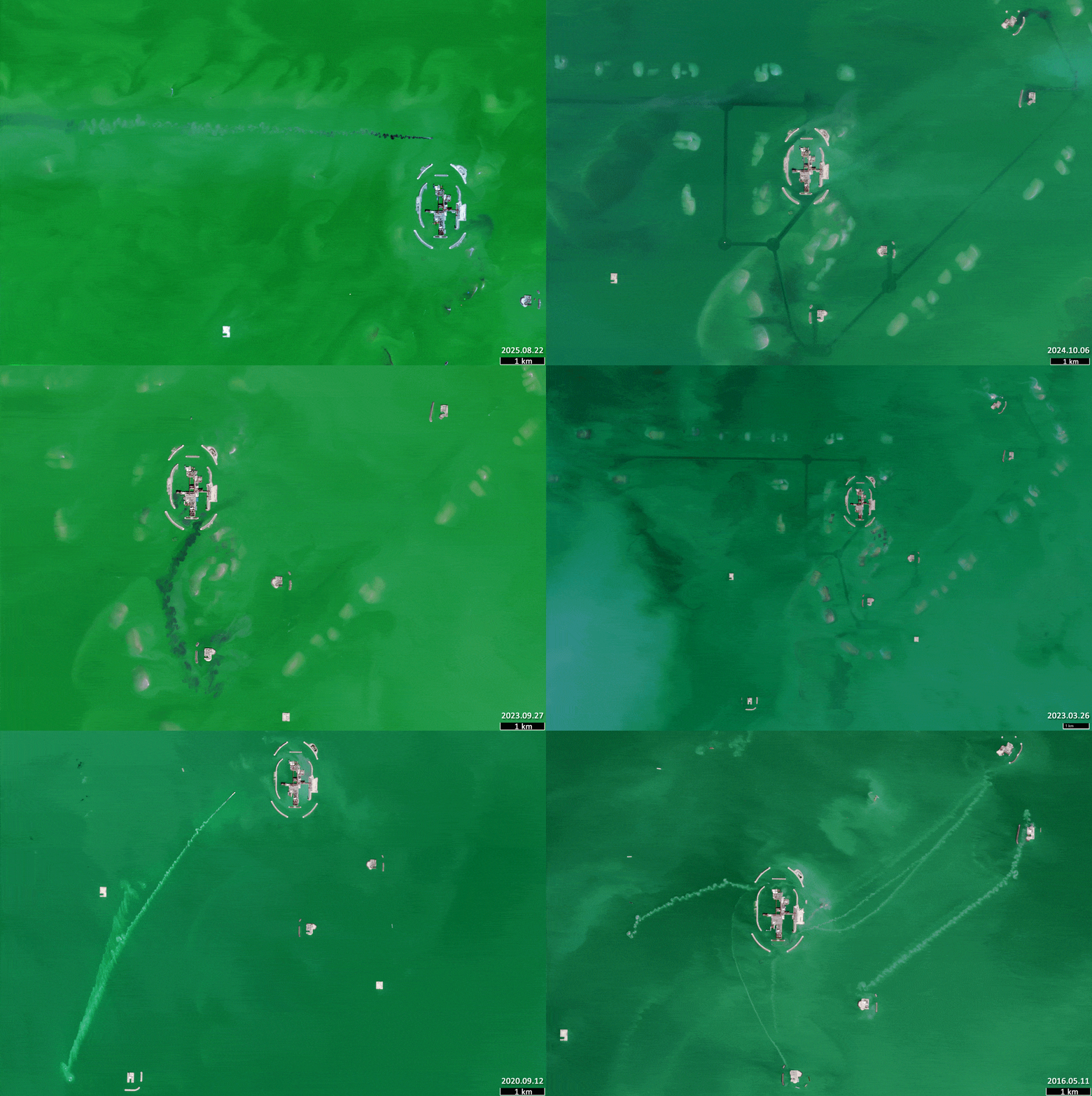
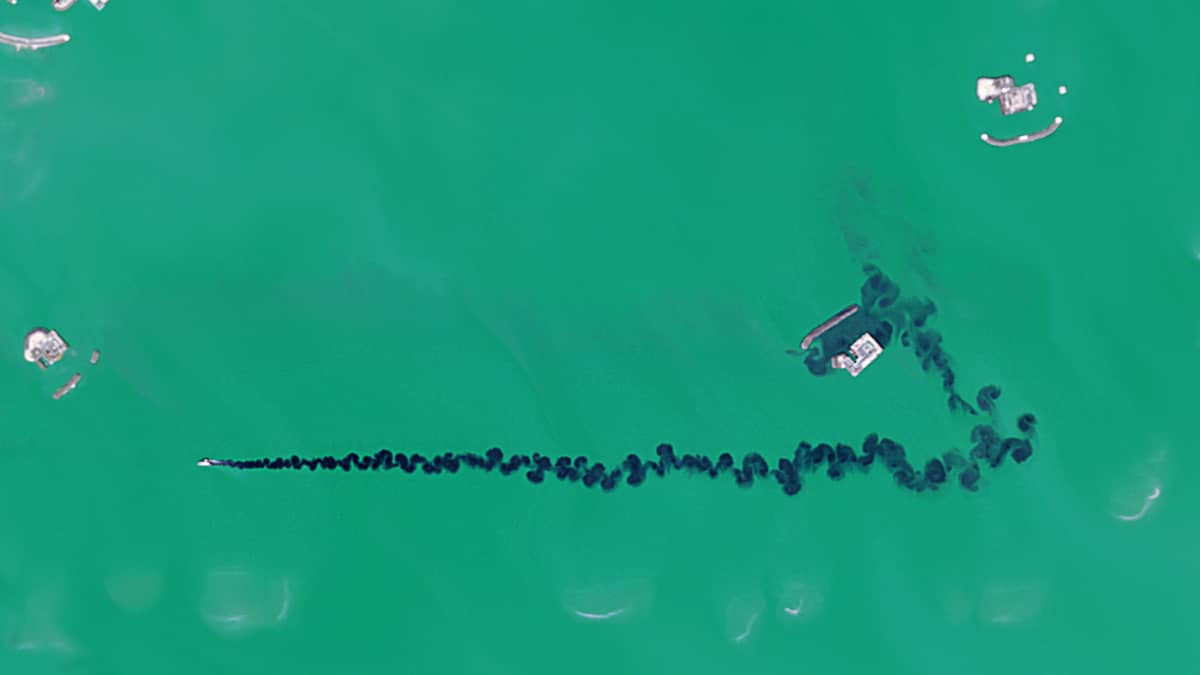
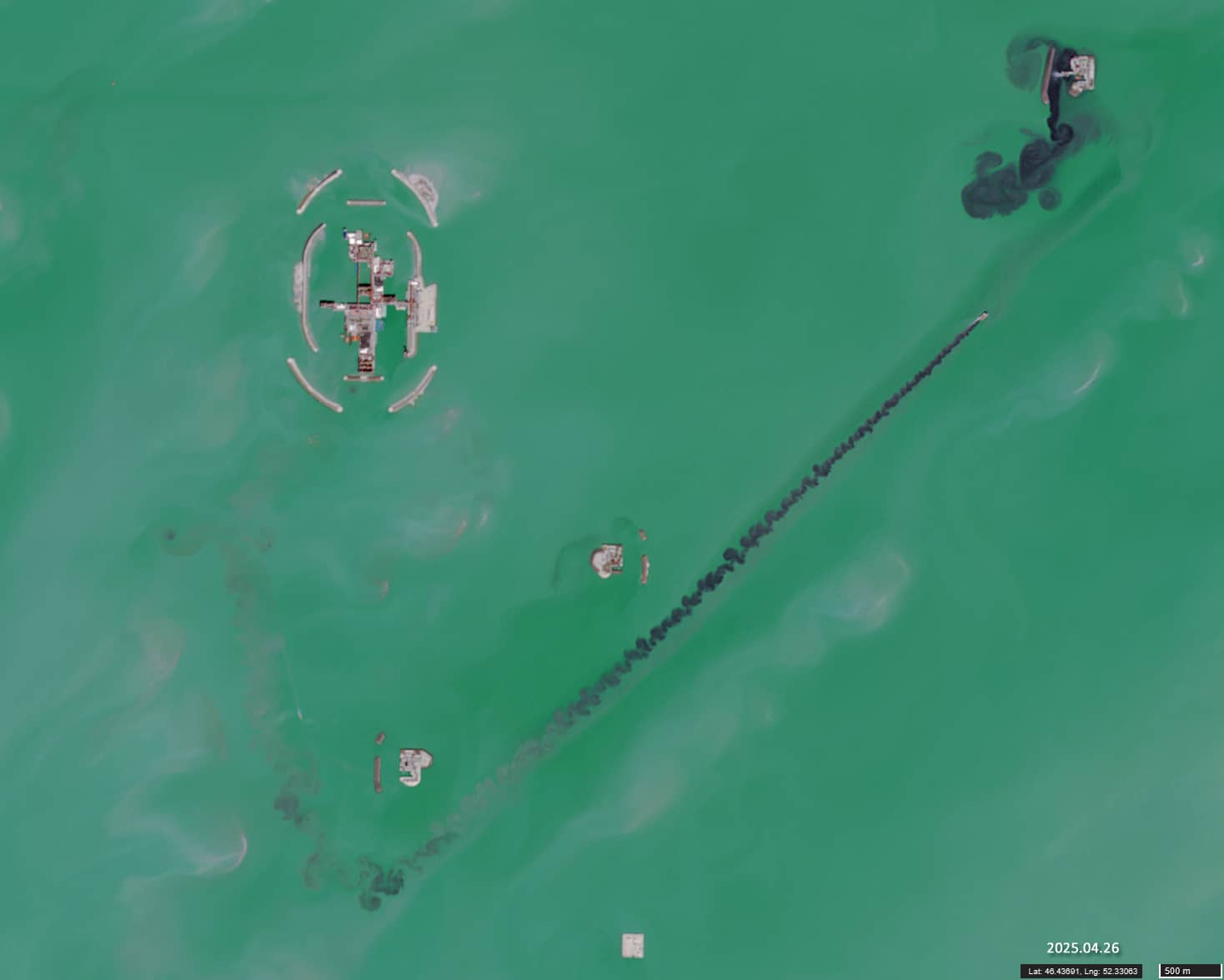
The Kashagan field uses small, unmanned artificial drilling platforms from which hydrocarbons are pumped via pipelines to Island D. This large production island is equipped with technical facilities for separating oil and water from the raw gas, as well as gas reinjection systems and service personnel. Around 4,000–5,000 people from all over the world are employed here. They live on accommodation vessels anchored near the shore, reaching the island by boat or helicopter.
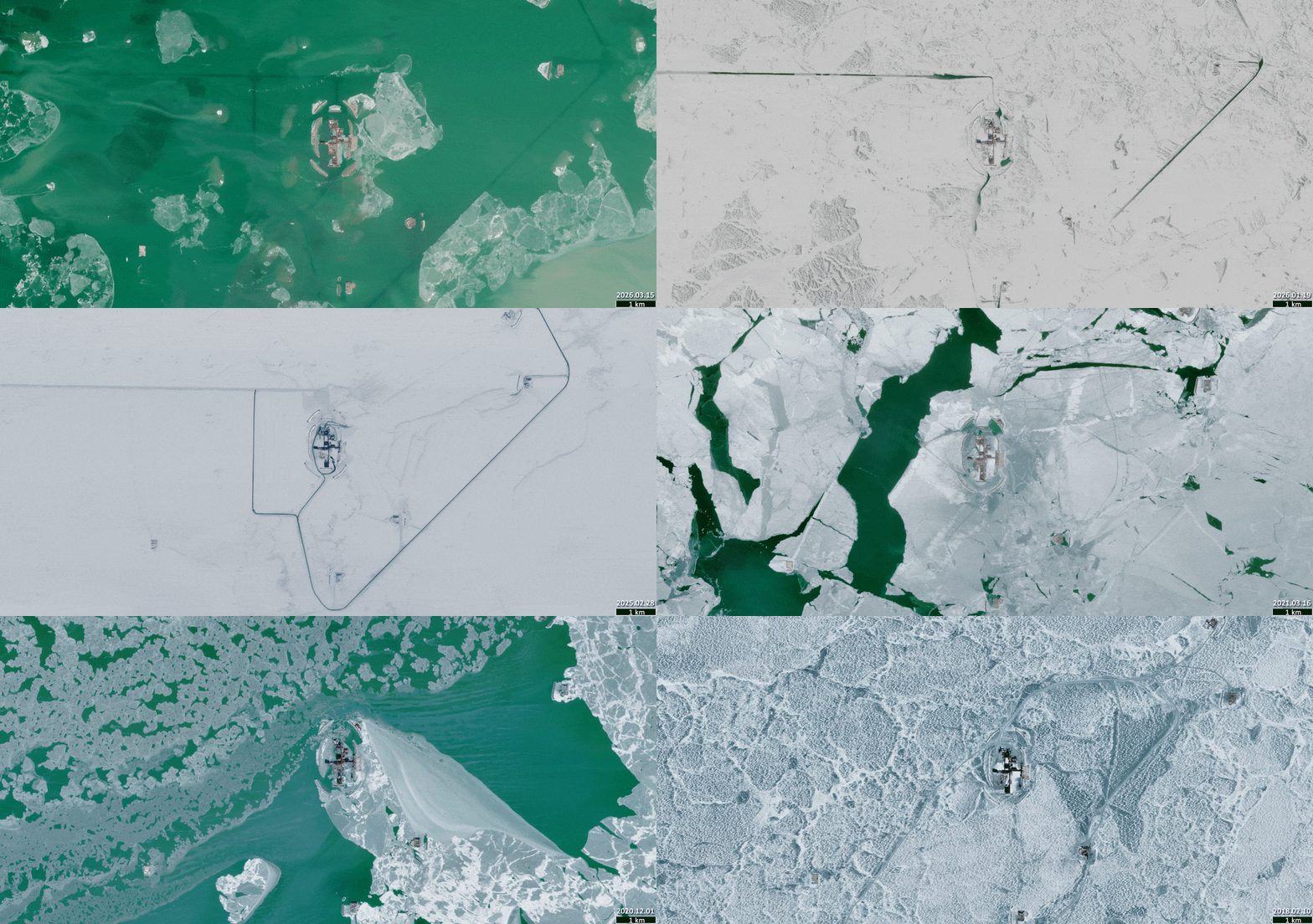
The costs associated with hydrocarbon production at this site are considerably high due to the challenging environmental conditions, including seasonal sea ice (see Slideshow 1), temperature fluctuations between −35 °C and +40 °C, and extremely shallow water depths, as well as the high concentration of hydrogen sulphide (approx. 17%) in the gas and sulphur in the oil, which create a highly corrosive environment. Consequently, the field is only economically viable when global oil prices are relatively high (around USD 100 per barrel or more).
In 2013, an accident occurred at the field, resulting in 2.8 million cubic meters of raw gas having to be flared, which is roughly equivalent to the annual consumption of about 3,500 people in Germany.
Several images of Island D and the vessels operating there are presented. Some of these vessels can be seen leaving visible traces on the water’s surface (Figures 1–5; see Figure 1 in particular; also see Slideshow 2).
The narrow linear and circular structures visible in the images correspond to underwater oil and gas pipelines, which can be seen through the water column.
Further reading
Insel D, Kashagan-Ölfeld, Kaspisches Meer, Kasachstan (Reddit, Russian)
Kashagan (Wikipedia, Russian)
Kashagan Field (Wikipedia)
Fig. 1
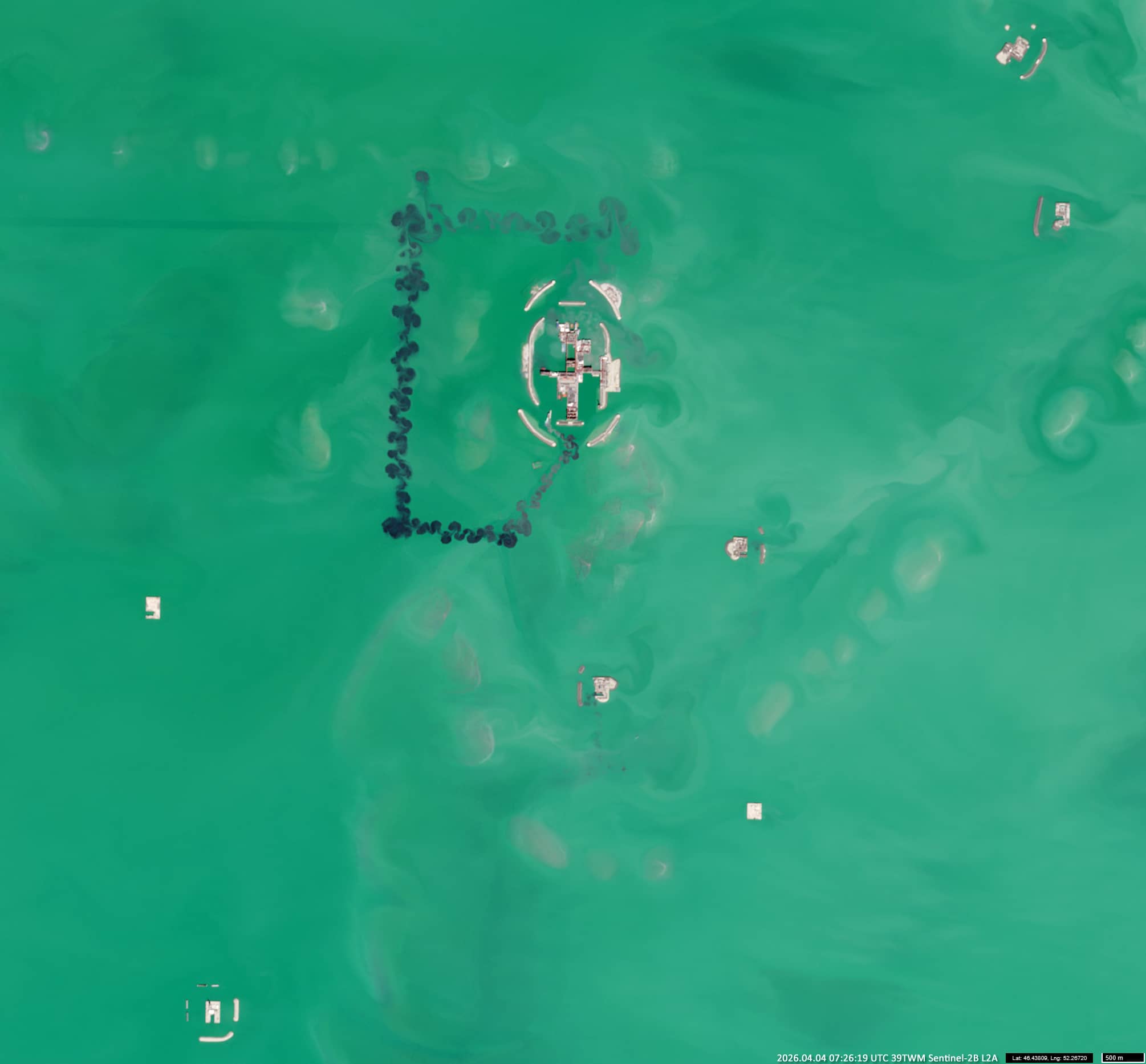
Fig. 2
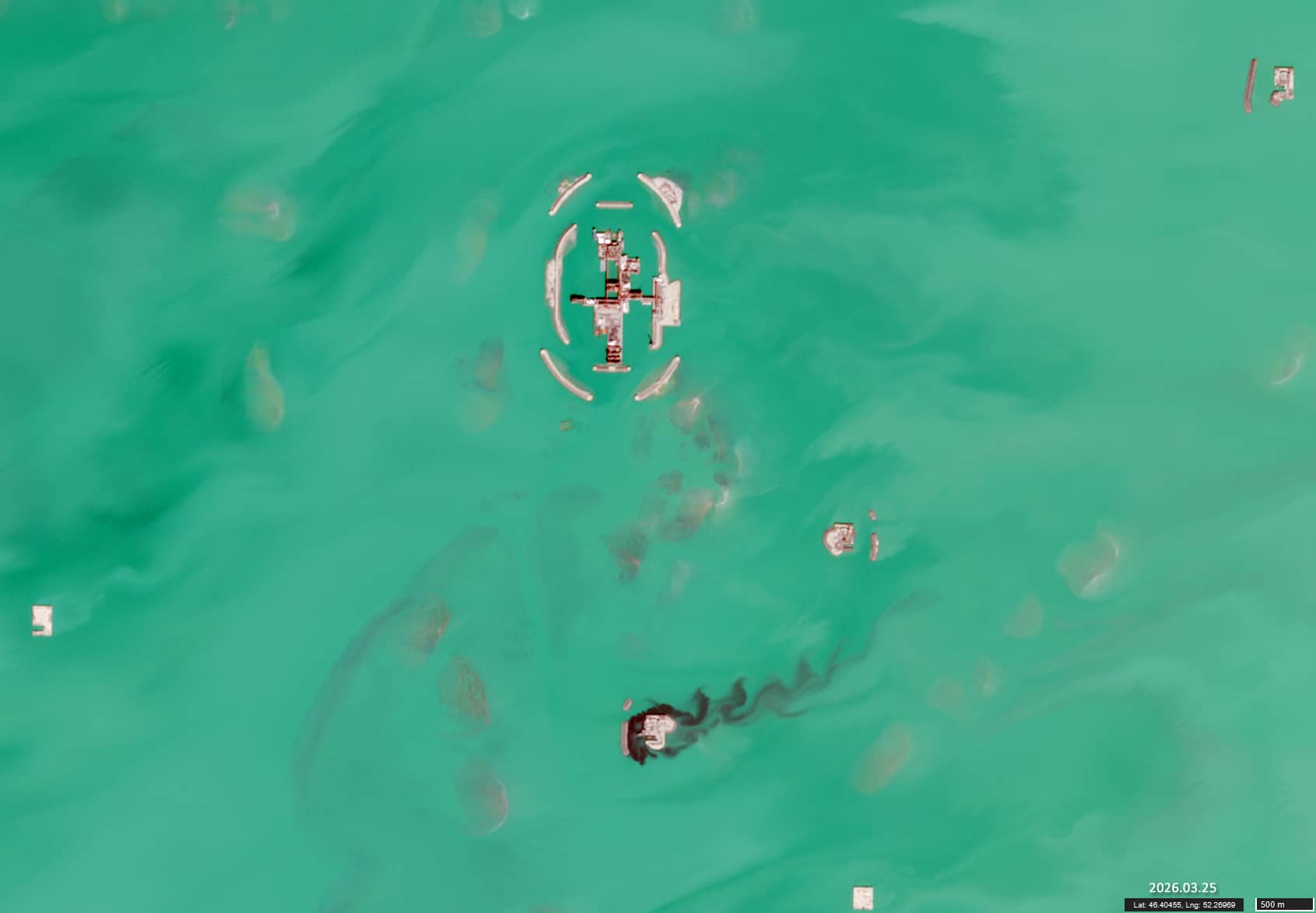
Fig. 3
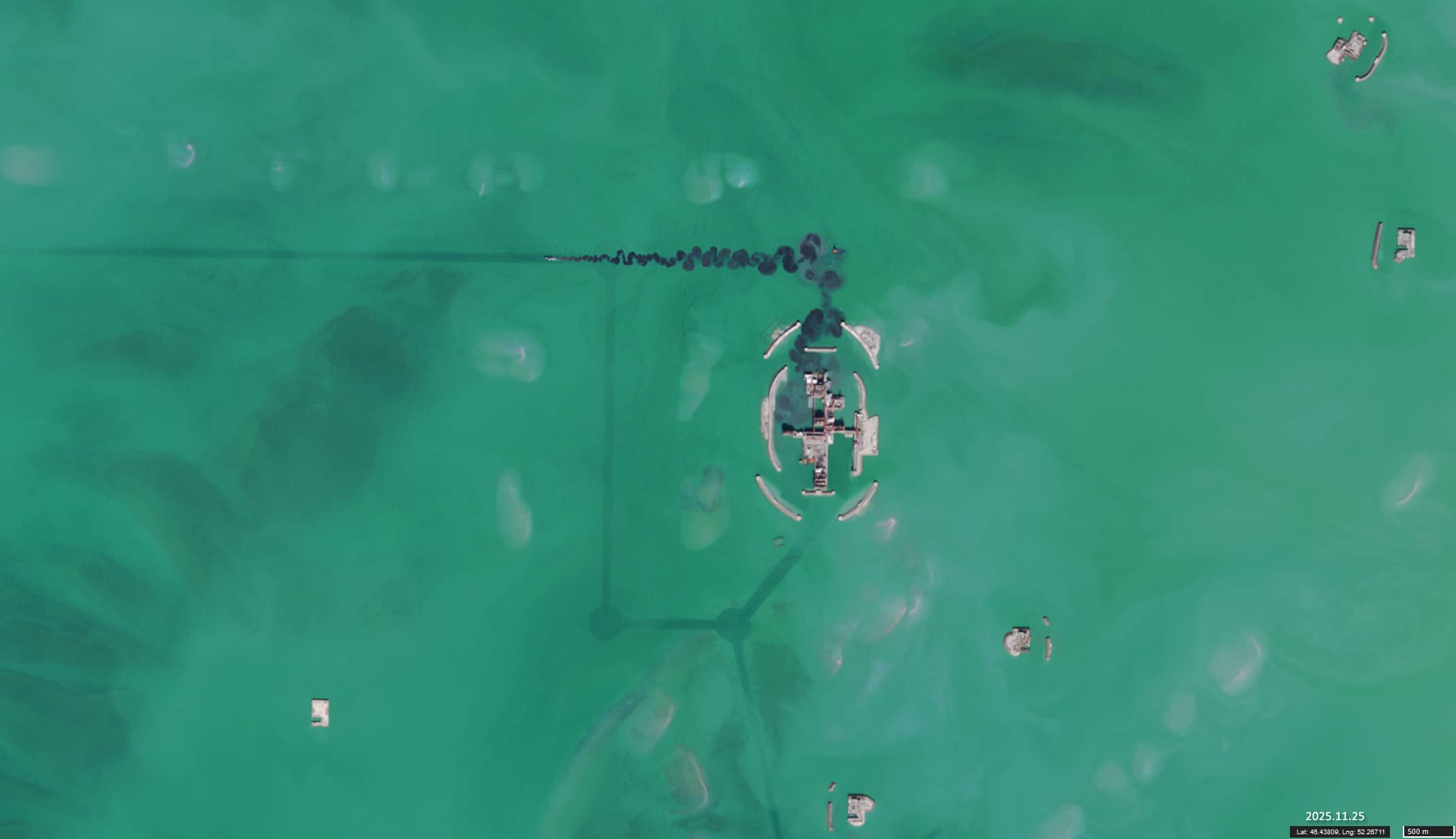
Fig. 4
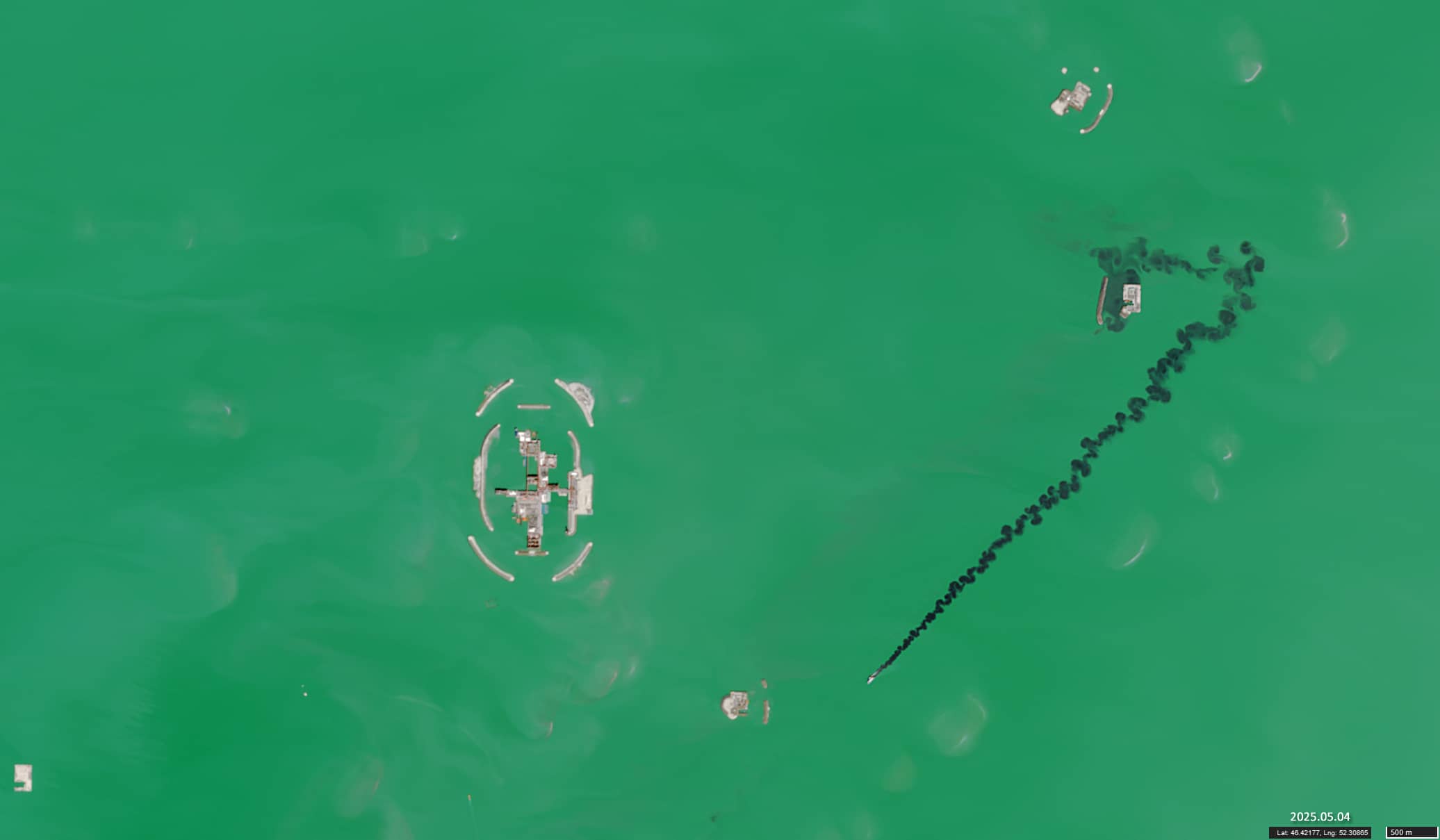
Fig. 5
Slideshow 1: Winter
Slideshow 2: Summer