
Oval Landforms of the Shalkarnur Ridge
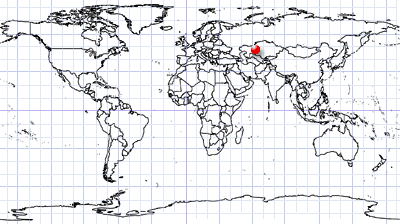
Kazakhstan
• 2026.10.09 | 06:47:59 UTC | Sentinel-2B L2A
Coordinates: 48.08° N, 63.49° E | MGRS: 41UNP 36 25
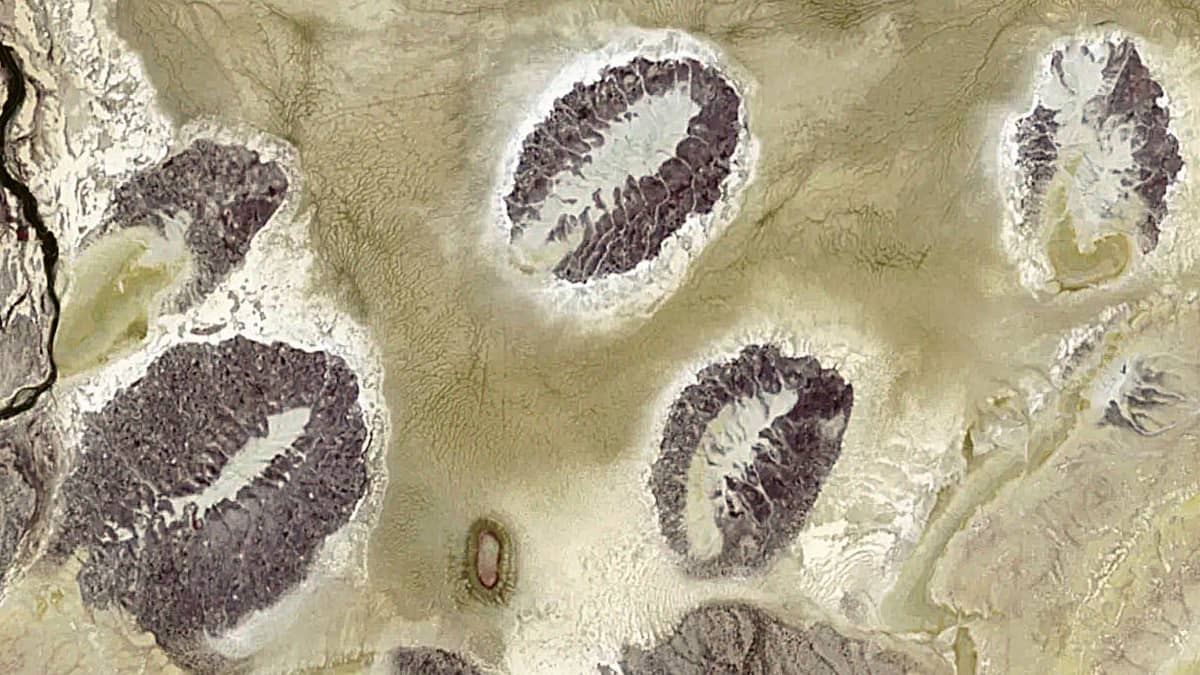
Unusual oval- to lens-shaped landforms resembling coffee beans can be observed around the Shalkarteniz salt-flat depression in Kazakhstan (Figure 1). The depression lies on the southern slope of the Shalkarnur Ridge, an approximately 150 km-long erosional remnant within the South Turgai Plate, in the Irgiz District of Aktobe Region.
The structures are 1–3 km long and predominantly oriented northeastward. Each features a light-coloured central zone, a dark, strongly dissected outer belt with nearly radial grooves, and a lighter-coloured outer rim. The central zones rise several metres above their surroundings.
The region is underlain by gently dipping sedimentary deposits, probably of Eocene or Oligocene age. The landforms are interpreted as erosional remnants, with their lighter-coloured cores potentially consisting of siltstone, marl, sandstone, or limestone.
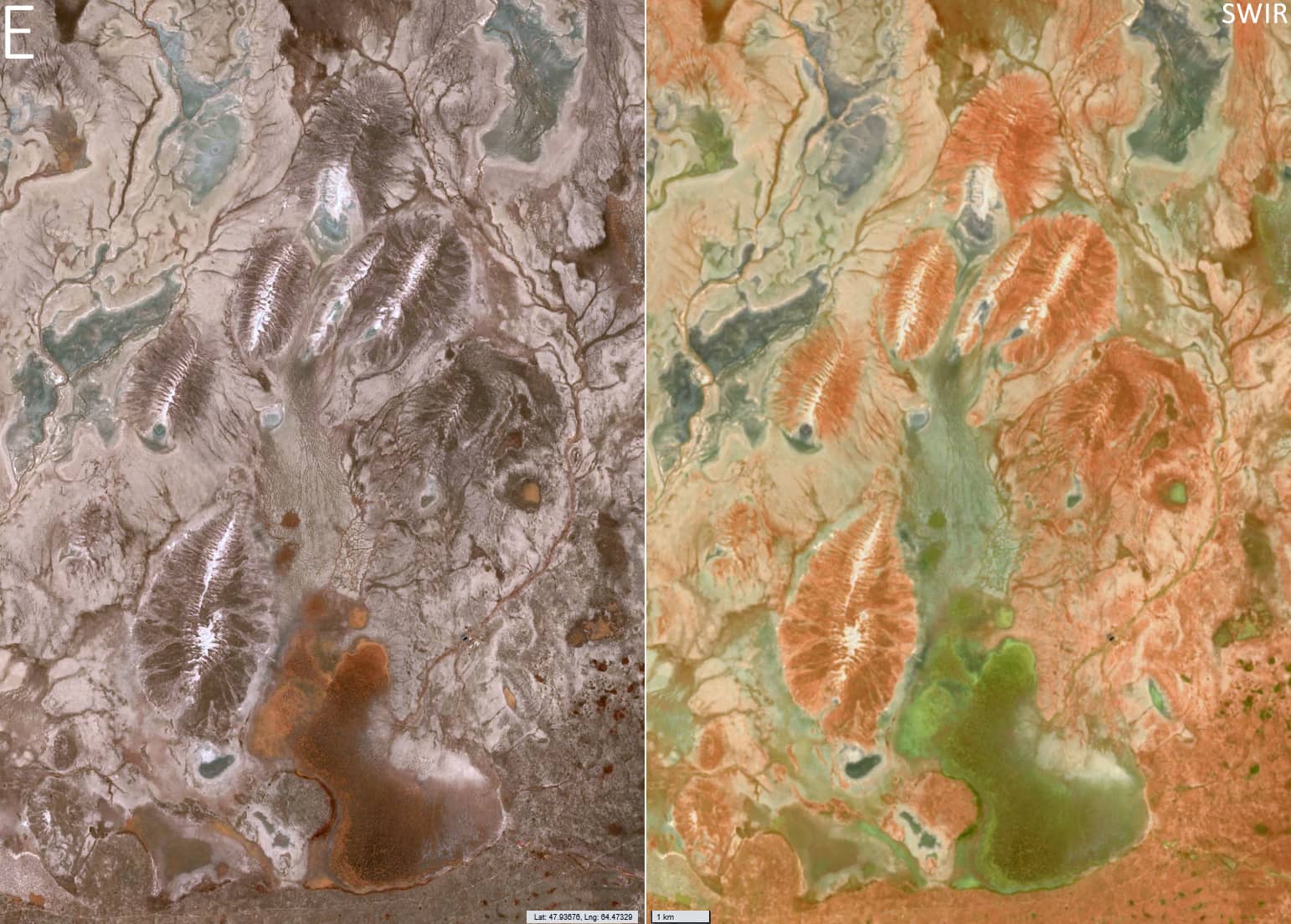
Five groups of structures, designated A–E, can be identified along the southern slope of the ridge (Figure 2). Groups A (Figure 3) and B (Figure 4) lie in the western part of the area, with Group B near the lakeshore. Group C (Figure 5) is located farther east, while Groups D (Figure 6) and E (Figure 7) lie approximately 60 km southeast of Group C.
Groups A, B, D, and E feature elongated, well-defined ridges with deeply incised gullies along their slopes. Their summits rise several tens of metres higher than those of the structures in Group C.
Group C differs in both shape and relief. Its structures have more rounded outlines and lower relief and are surrounded by unconsolidated sand, salt accumulations, and fluvial and lacustrine sediments associated with the Turgai River and saline Lake Shalkarteniz. These deposits may influence local erosion and sedimentation, contributing to the subdued morphology. More extensive denudation, partial burial by surrounding sediments, or exposure of lower levels of the erosional remnants may also explain the differences.
Further reading
Fig. 1
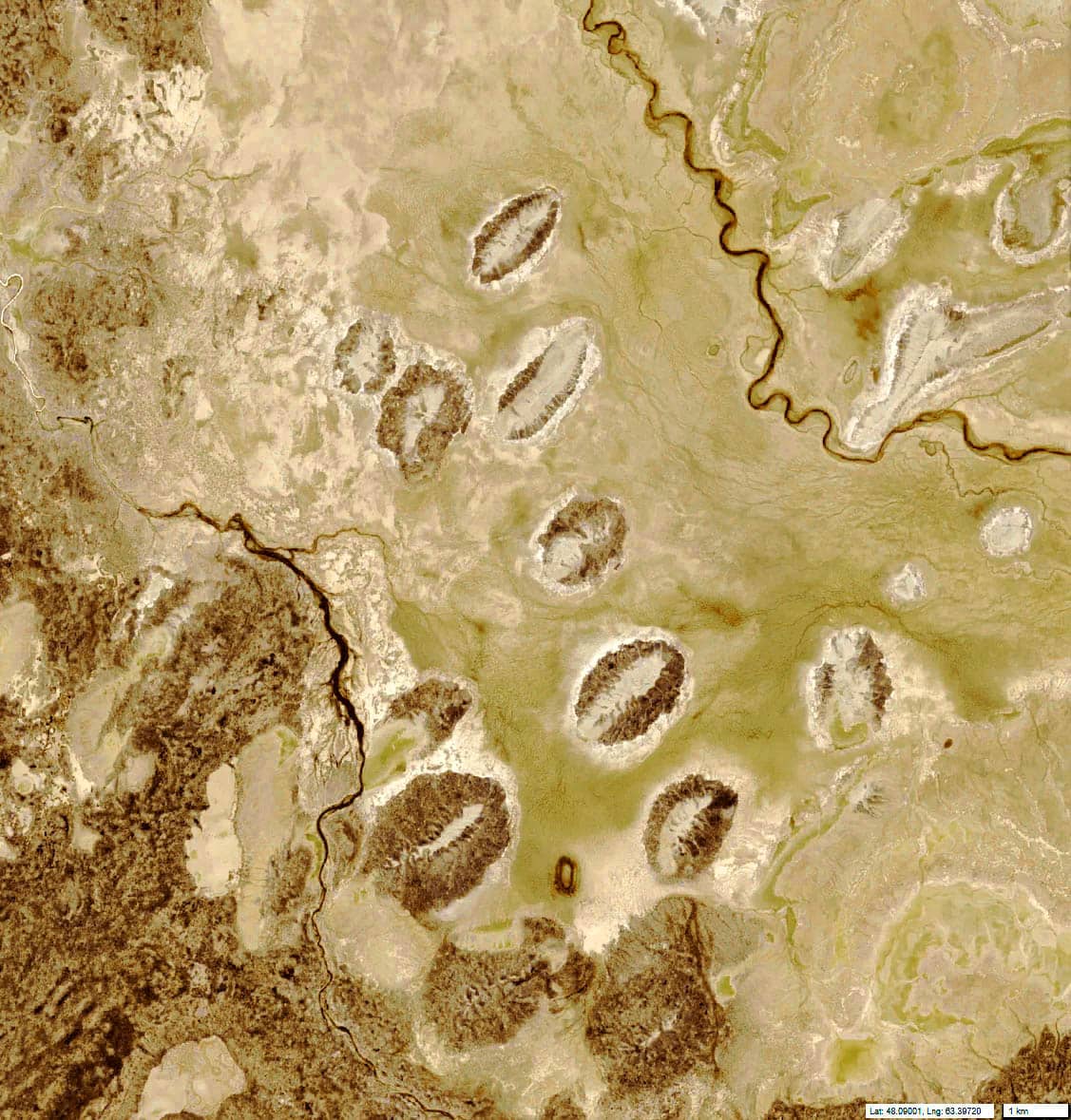
Fig. 2
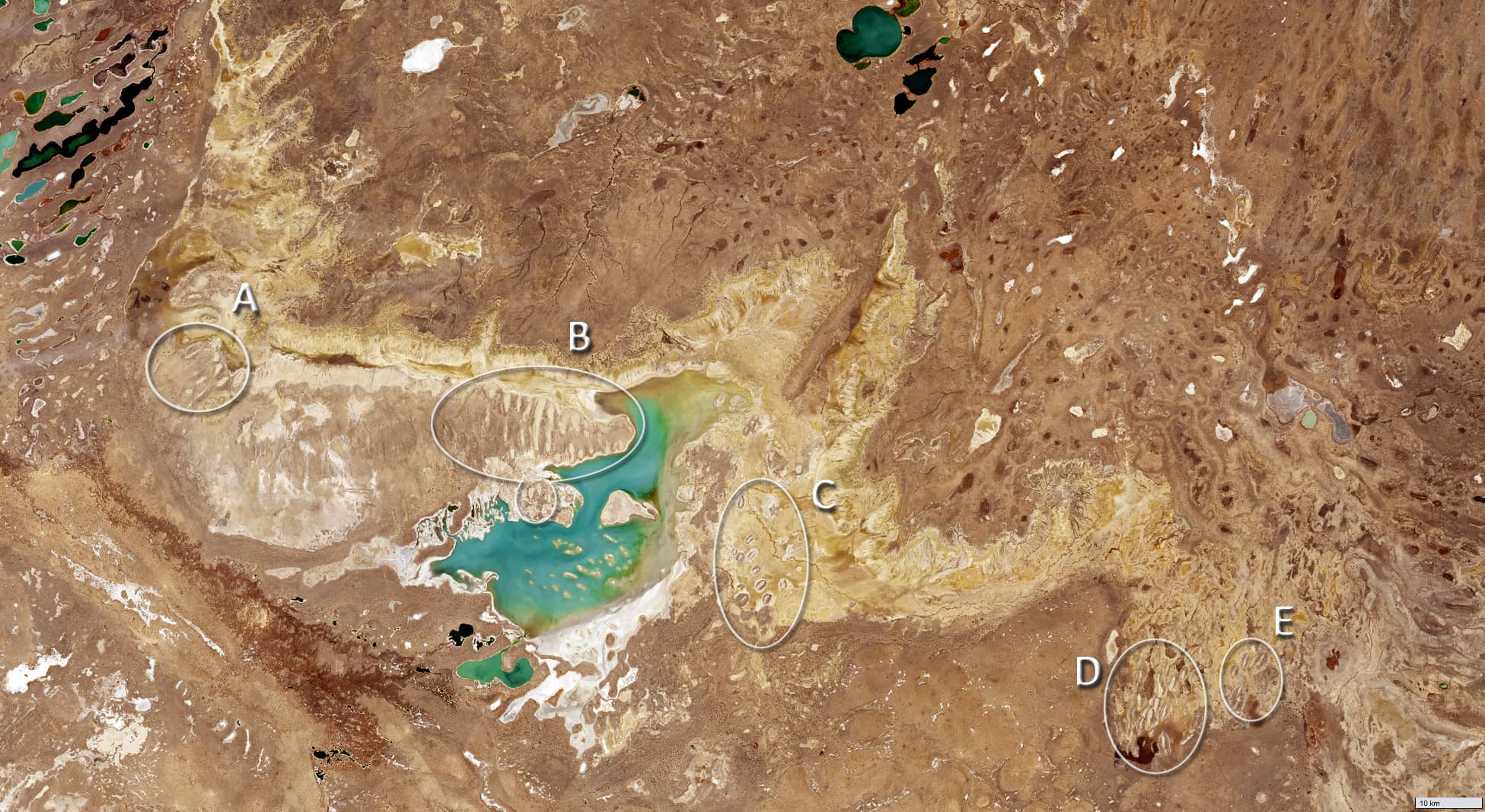
Fig. 3
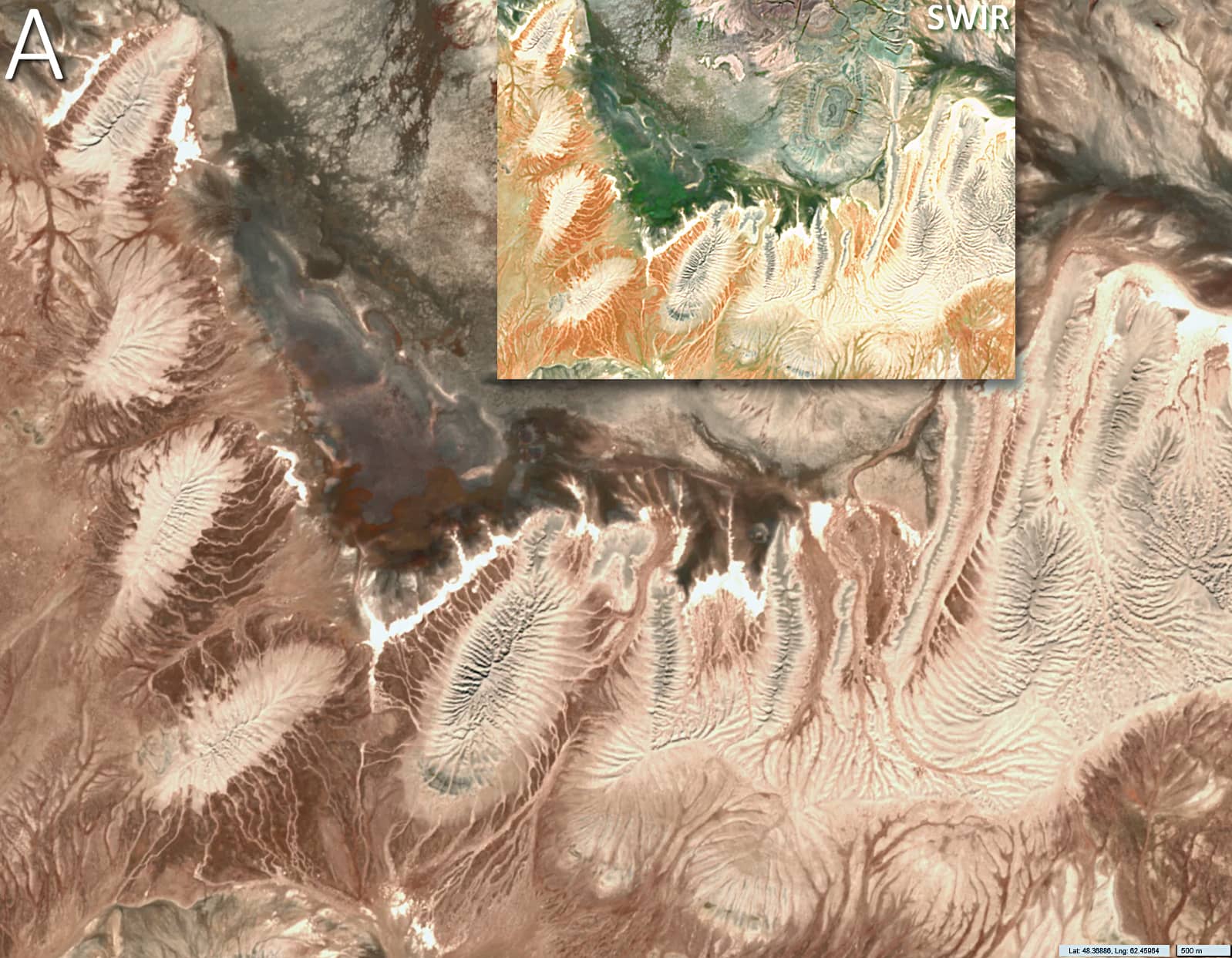
Fig. 4
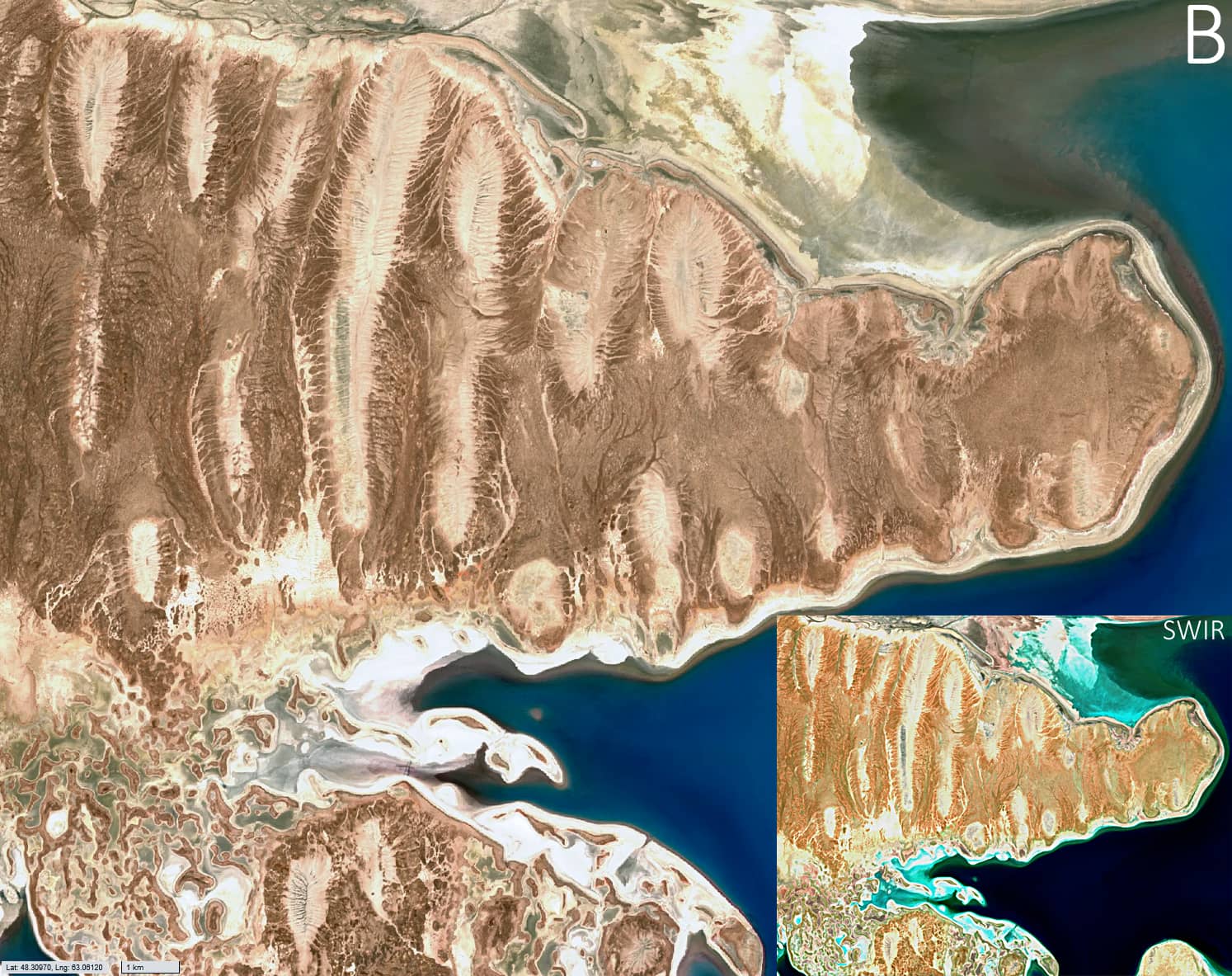
Fig. 5
Fig. 6
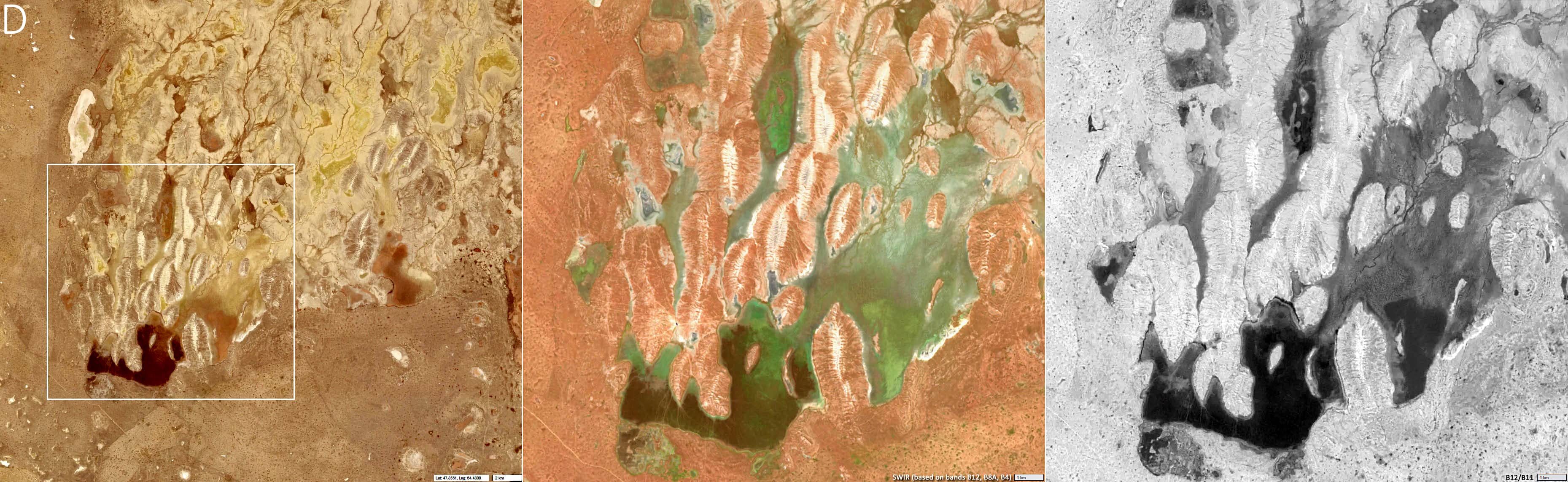
Fig. 7