
The large sediment plume in the North Sea
Between East of England and The Netherlands | North Sea
Dates of acquisition:
• 2026.04.07 | 09:47:56 UTC
• 2022.04.06 | 10:40:21 UTC
Sensor: Sentinel-3A OLCI, Sentinel-2C L2A
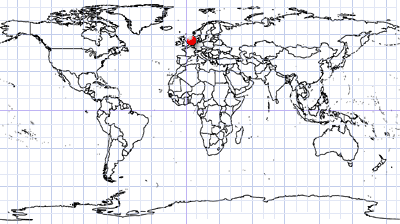
Coordinates: ca. 54°N, 5°E | MGRS: 31UFV 31 85
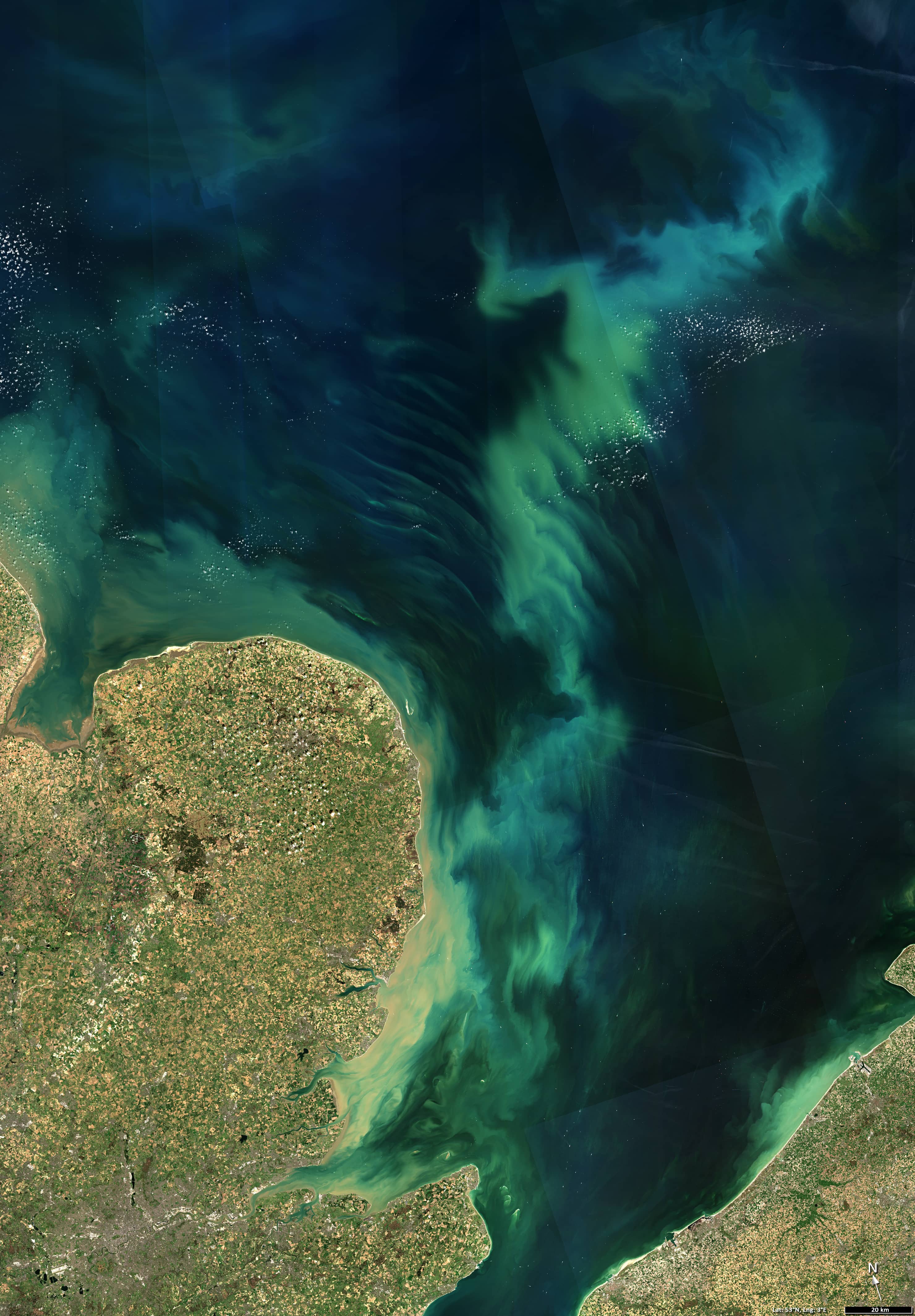
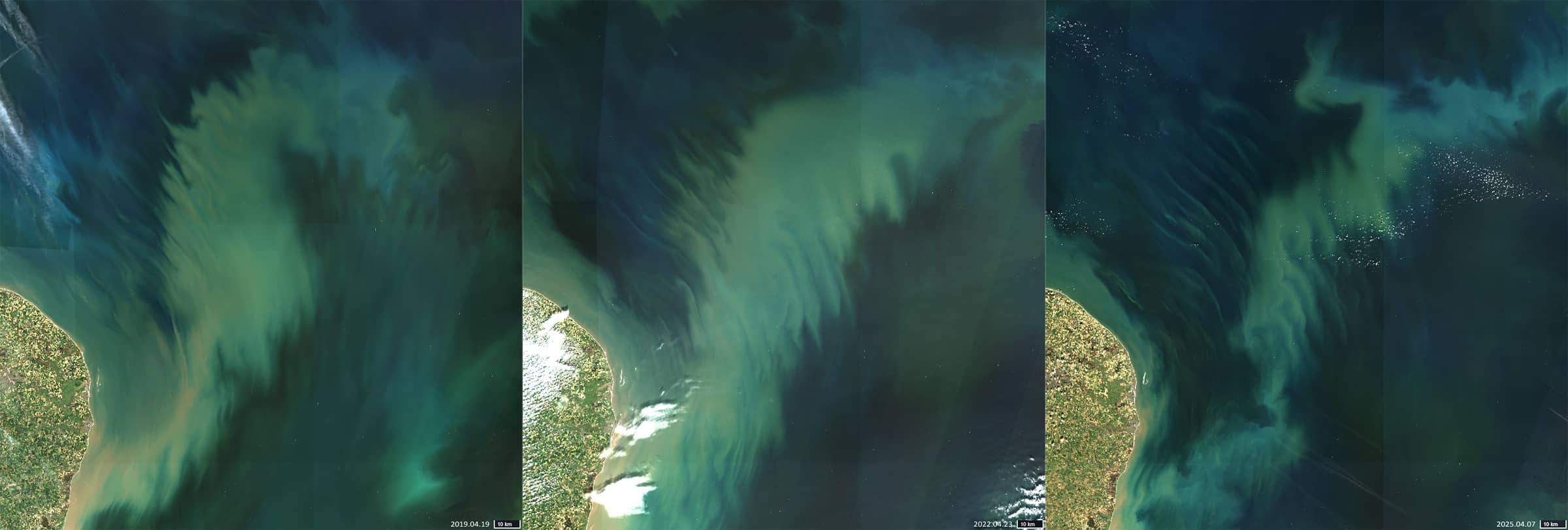
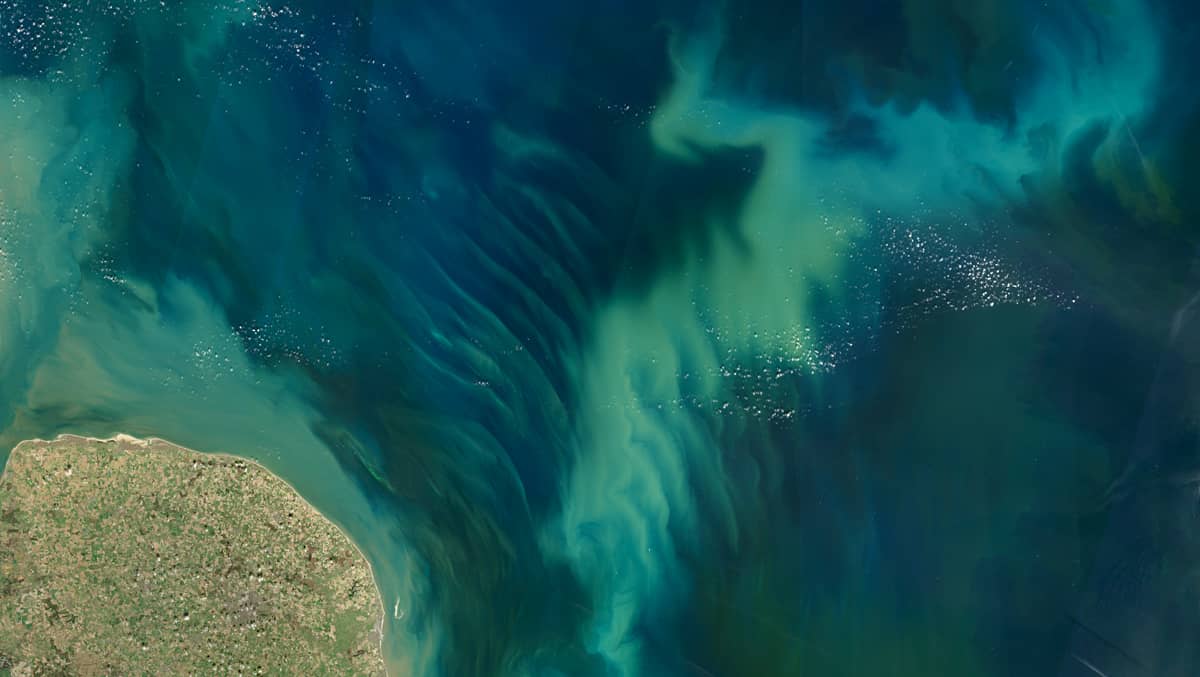
The Sentinel-3 image (Figure 1) was acquired under exceptionally favorable atmospheric conditions, with a cloudless sky over the entire south-eastern North Sea. These conditions allowed the observation of a continuous plume extending over more than 1,200 km, from the Thames estuary to near Gothenburg and along much of the Swedish coast of the Kattegat (Figure 2). The situation is reminiscent of that described in article “Sediment from the Thames & Wash Estuaries”, featured in our gallery a year ago.
The River Thames flows into the south-western North Sea. A plume of suspended matter originating from the Thames estuary is visible as a brownish-yellow mass of water This colour is caused by the terrestrial particles that the river carries on its journey through England. The sediment load consists mainly of silt-sized particles, clay minerals, and fine-grained sand, as well as trace amounts of microplastics and heavy metals originating from human activity. Regional circulation patterns then transport this plume through the darker waters of the North Sea along the coasts of Belgium, the Netherlands, Germany, and Denmark. Along this route, the Thames-derived sediments interact and mix with local suspended particulate matter, finally reaching the waters off the coasts of Sweden and Norway near the Danish Strait.
The spatial extent and intensity of the sediment plume are determined by the combined effects of river discharge, tidal currents, the resuspension of seabed sediments, and hydrodynamic conditions relating to ocean currents in this part of the North Sea. And with some phantasy, the plume looks like a little dragon extending from Thames Estuary to the west coast of Denmark.