
Lake Magadi
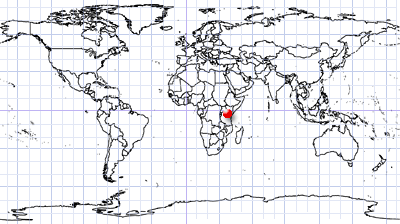
Southern Kenya | East Africa
Date of acquisition: February 21st, 2026 | 07:39:31 UTC
Sensors: Sentinel-2C L2A
Coordinates: ca. 1.9°S, 36.26°E | MGRS: 24MZC 04 89
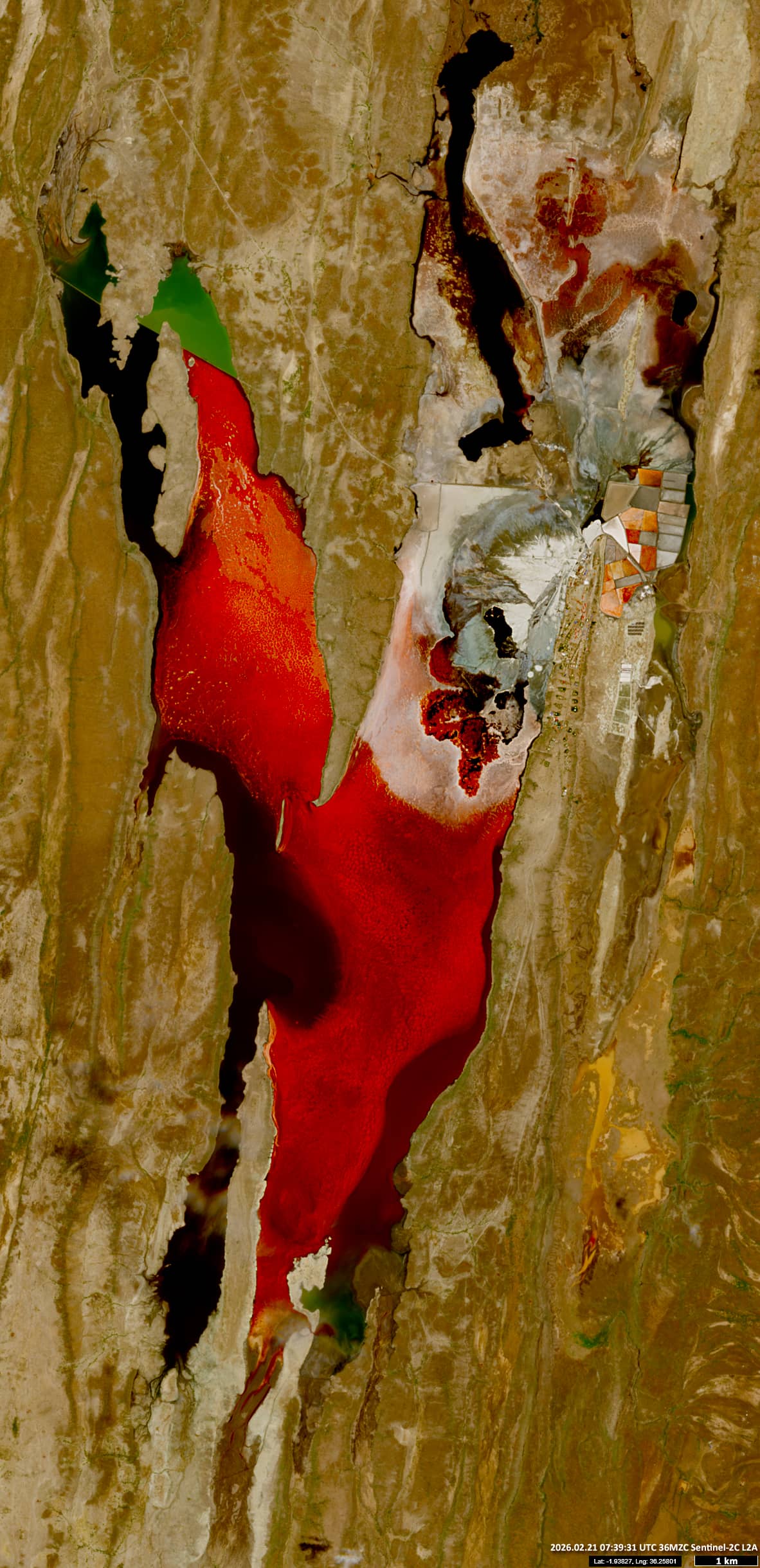
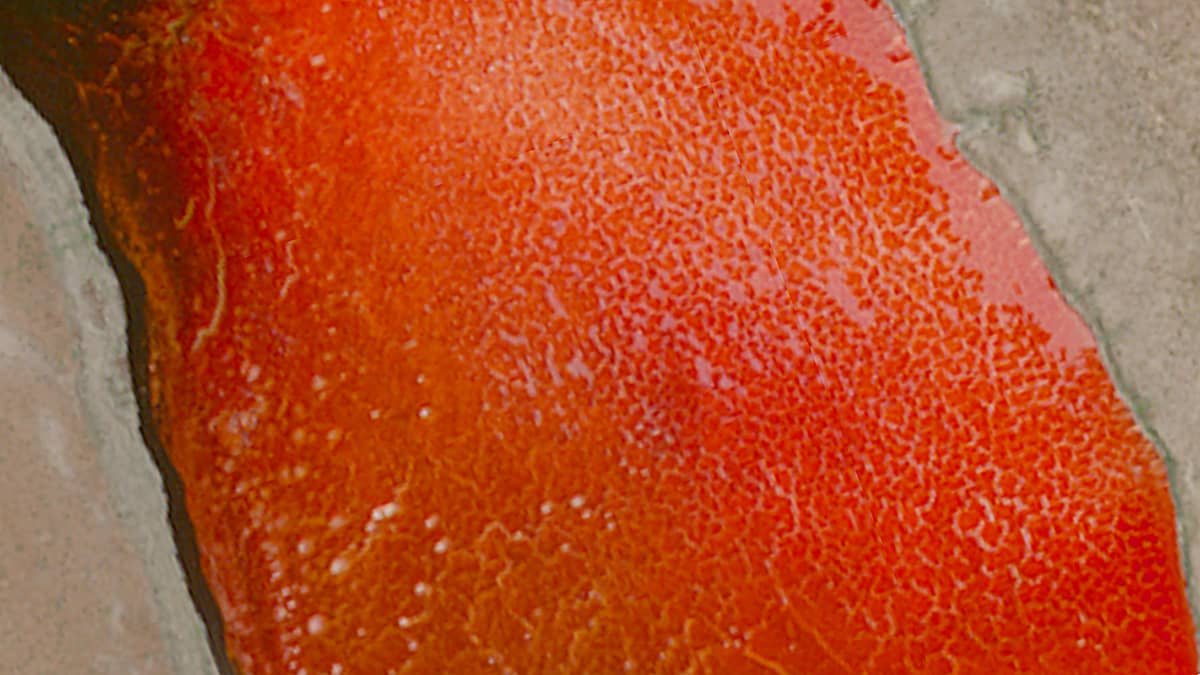
The true-colour Sentinel-2 image presents Lake Magadi in East Africa. The most striking feature is the intense red colour of the water, which is exactly how it appears to the human eye.
Lake Magadi, which takes its name from the Maasai word for “salty”) is a hypersaline inland lake in southern Kenya, within the East African Rift System (EARS). It is located in a volcanic region characterised by hot salt springs.
An extensive trona deposit has formed through chemogenic processes on the lakebed , reaching a thickness of up to 40 m in certain areas. Trona (trisodium dicarbonate dihydrate; Na₂CO₃·NaHCO₃·2H₂O), also referred to as sodium sesquicarbonate dihydrate or “Egyptian natron,” is a non-marine evaporite mineral precipitated from a supersaturated solution. An important natural source of soda it is used extensively in the production of glass, chemicals, paper, detergents and textiles, as well as in carbon capture technologies for flue gases.
The lake’s exceptional colour is primarily attributed to the proliferation of haloarchaea and cyanobacteria, which thrive under conditions of extreme salinity, alkalinity and temperature. Among them is Dunaliella salina, a single-celled alga that can survive in such environments thanks to its high concentration of β-carotene, which protects against strong sunlight, and glycerol, which reduces osmotic stress.
Additional pigmentation is caused by halophilic archaea, including purple species of the genus Halobacterium. These species are coloured by bacteriorhodopsin, a light-absorbing protein.
Lake Magadi’s red colouration is most pronounced during the dry season, when enhanced evaporation leads to a rise in salinity. This stimulates halophilic microorganisms to produce protective carotenoid pigments, resulting in a deep red colour of the water.
The lake’s extreme environmental conditions provide a habitat for only a single species of fish, Alcolapia grahami, which can tolerate water temperatures of up to 42 °C and highly alkaline conditions.
Further reading
Lake Magadi (Wikipedia)
Explore the Lake Magadi Kenya (Africa Adventure Vacations)
Earth from Space: Salty lakes (ESA Multimedia)
KBA in Focus: Lake Magadi (Nature Kenya)
Halobacterium (Wikipedia)
Dunaliella salina (Wikipedia)