
Mysterious Formations in Great Bahama Bank
The Bahamas
Dates of acquisition:
• 2025.03.14 | 15:55:41 UTC
• 2019.03.04 | 15:55:21 UTC
• 2018.12.04 | 15:55:21 UTC
etc.
Sensors: Sentinel-2A,B,C L2A; Landsat 4-5 TM L2
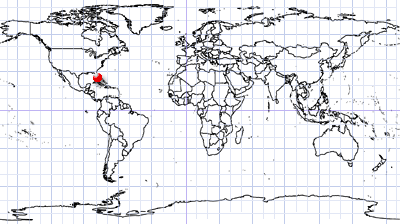
Coordinates: ca. 25.1°N, 78.9°W
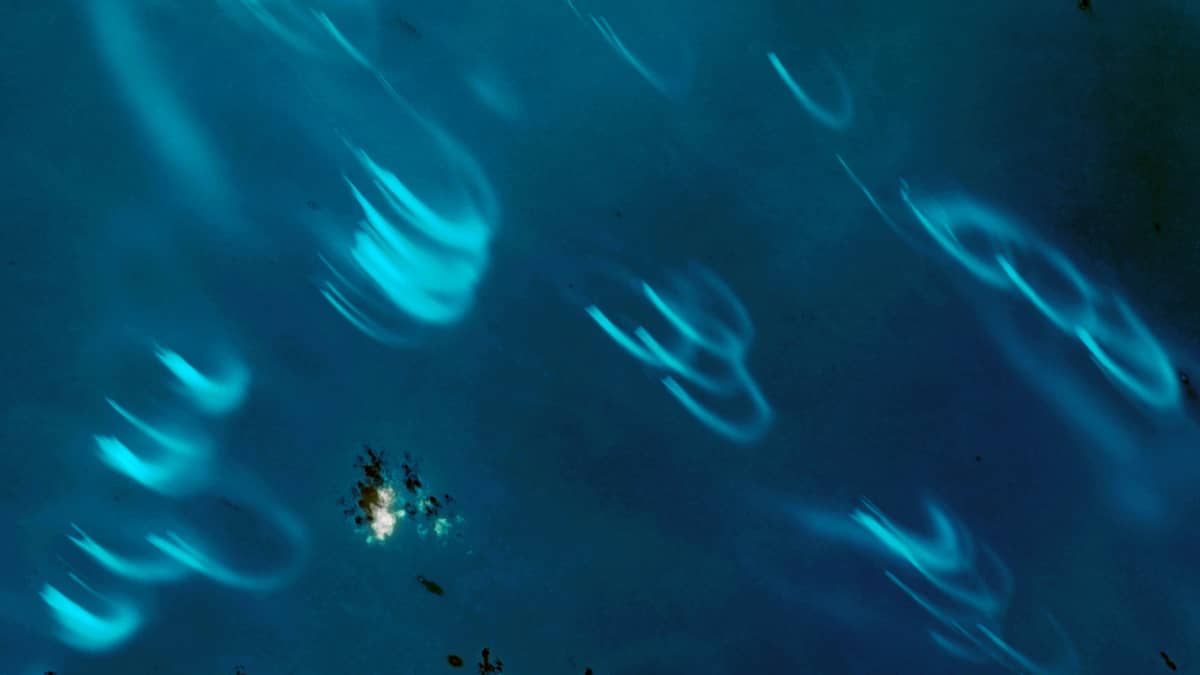
In the turquoise waters north of the Great Bahama Bank, strange milky-yellow-blue patterns appear from time to time (Figures 1–9). They form spots, cloud-like patches, graceful lines, and swirling shapes that seem to move together — like living forms just below the surface.
At first, it’s easy to think these are biological swarms. But their enormous size — stretching for kilometres — and the lack of absorption features typical of plankton hint at something else.
The Great Bahama Bank (GBB) is one of the largest shallow-water carbonate platforms on Earth, a vast area of reefs, dunes, and fine sediments covering more than 60,000 km². What we’re seeing here is a natural phenomenon known as a “whiting event.”
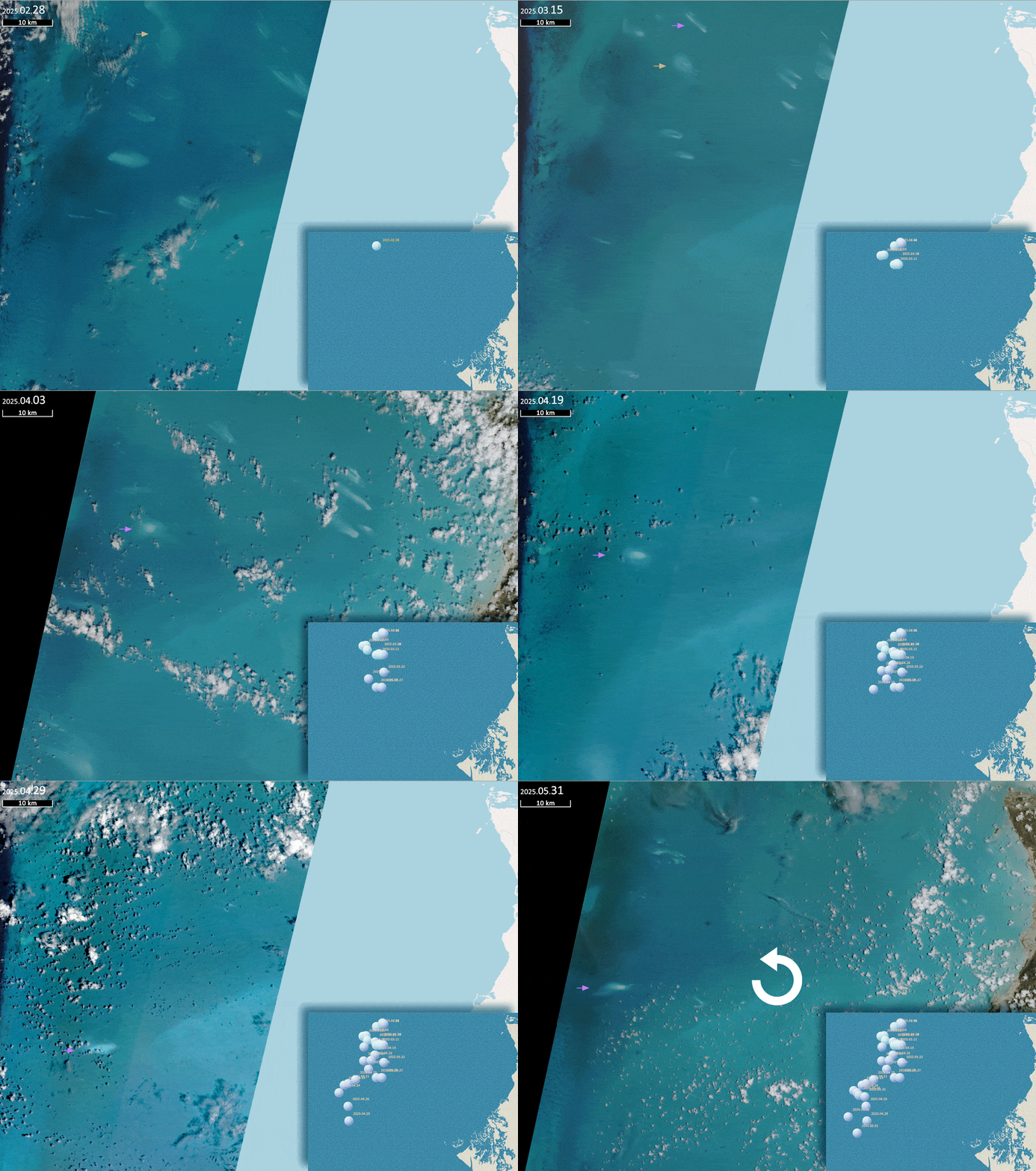
During these events, fine-grained carbonate minerals such as calcite and aragonite become suspended in the water, creating luminous clouds visible even from space. The particles can originate from shell fragments, algae, or direct mineral precipitation. Whitings vary widely in size and can persist from days to months (see Figure 12 Animation).
Scientists have debated the cause of these events for nearly a century now. Hypotheses range from physical resuspension of sediments to carbonate precipitation triggered by microscopic algae. None of them alone explains all observations — the process remains partly mysterious.
Interestingly, the whitings follow a seasonal rhythm: they are most common in winter and spring, when winds, currents, and subtle shifts in water chemistry may favour their formation.
Table: Occurence over the years

Our analysis of Sentinel-2 imagery from 2016 to 2025 confirms this pattern. Whitings were frequent and extensive until 2019, then became rare for several years before returning in 2025 — when some formations reached up to 25 km in length and persisted for nearly three months.
Similar events can be seen in archival Landsat images dating back to 1972. The reason why these suspended sediments form such elegant, organised shapes remains unclear. One possibility is that circular, roller-like water motions are simply a natural feature of the region — and that the visible carbonates act as natural tracers, revealing hidden patterns in the sea’s restless movements.
Further reading
Mysterious increases of whiting events in the Bahama Banks (ScienceDirect)
The formation of whitings on the Little Bahama Bank (ScienceDirect)
Patches Of Bahama’s Sea Keep Turning White And Scientists Are Mystified (IflScience)
Mysteries Remain About Bahama Whiting Events (NASA Earth Observatory)
Fig. 1
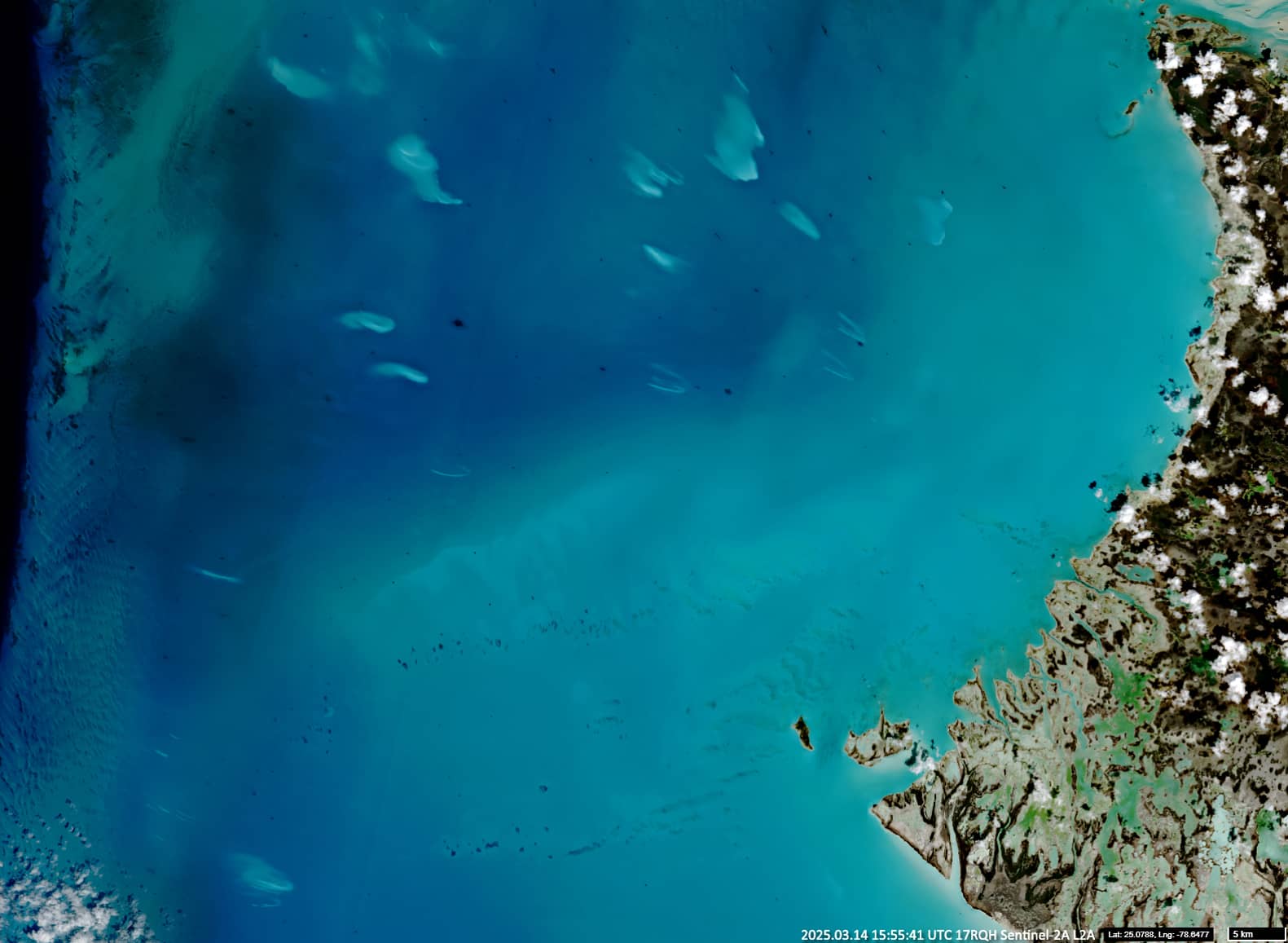
Fig. 2
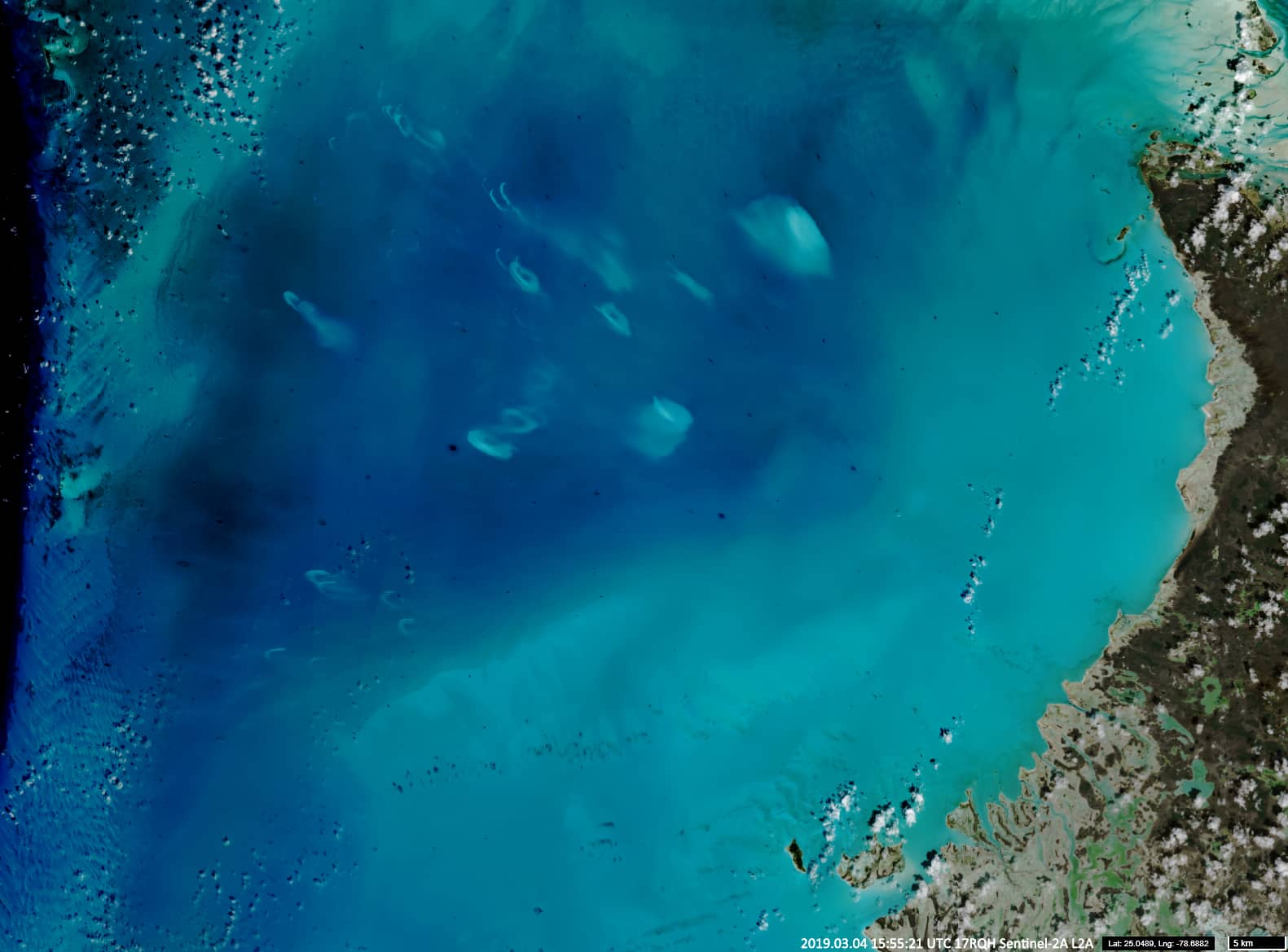
Fig. 3
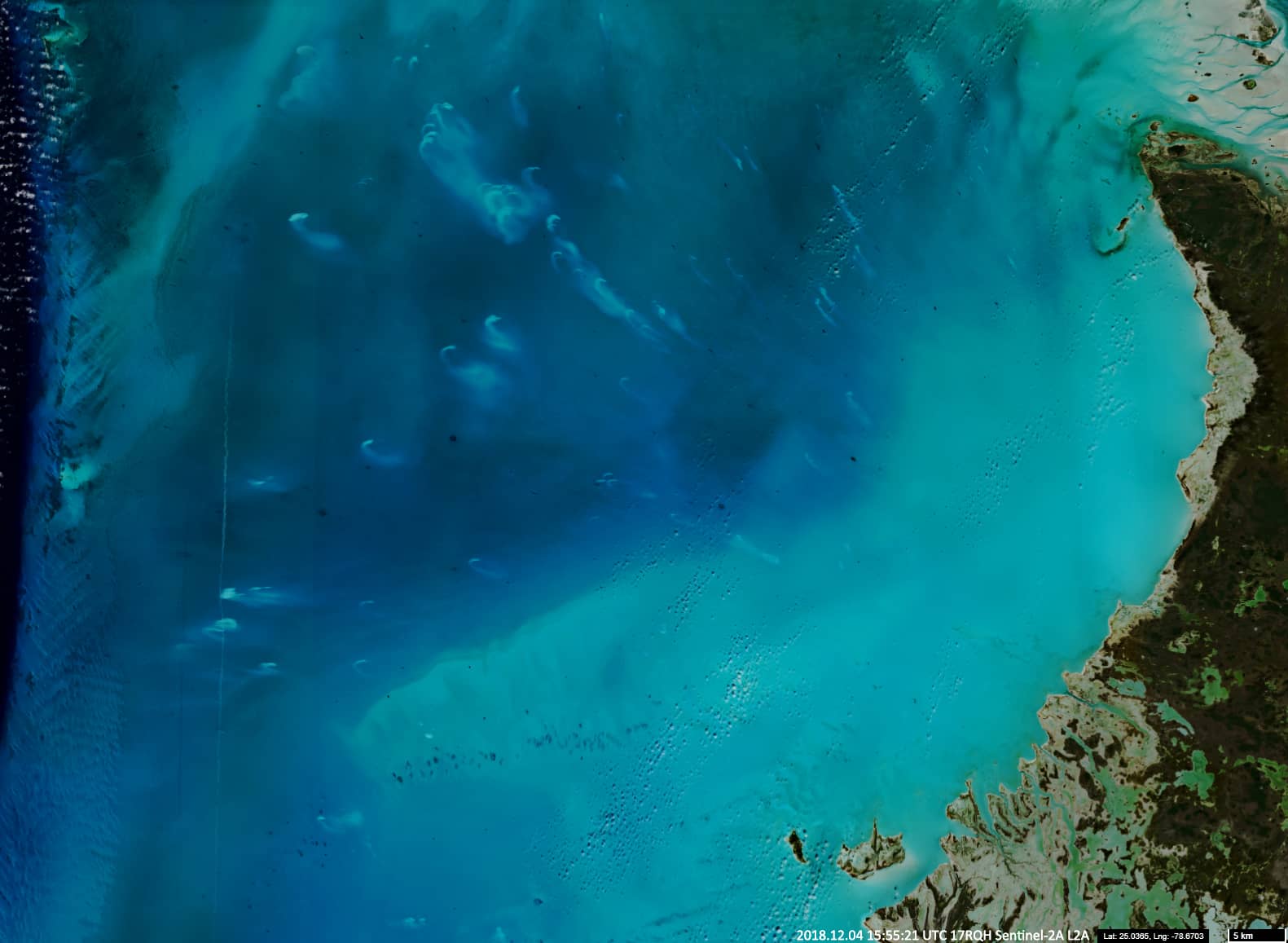
Fig. 4
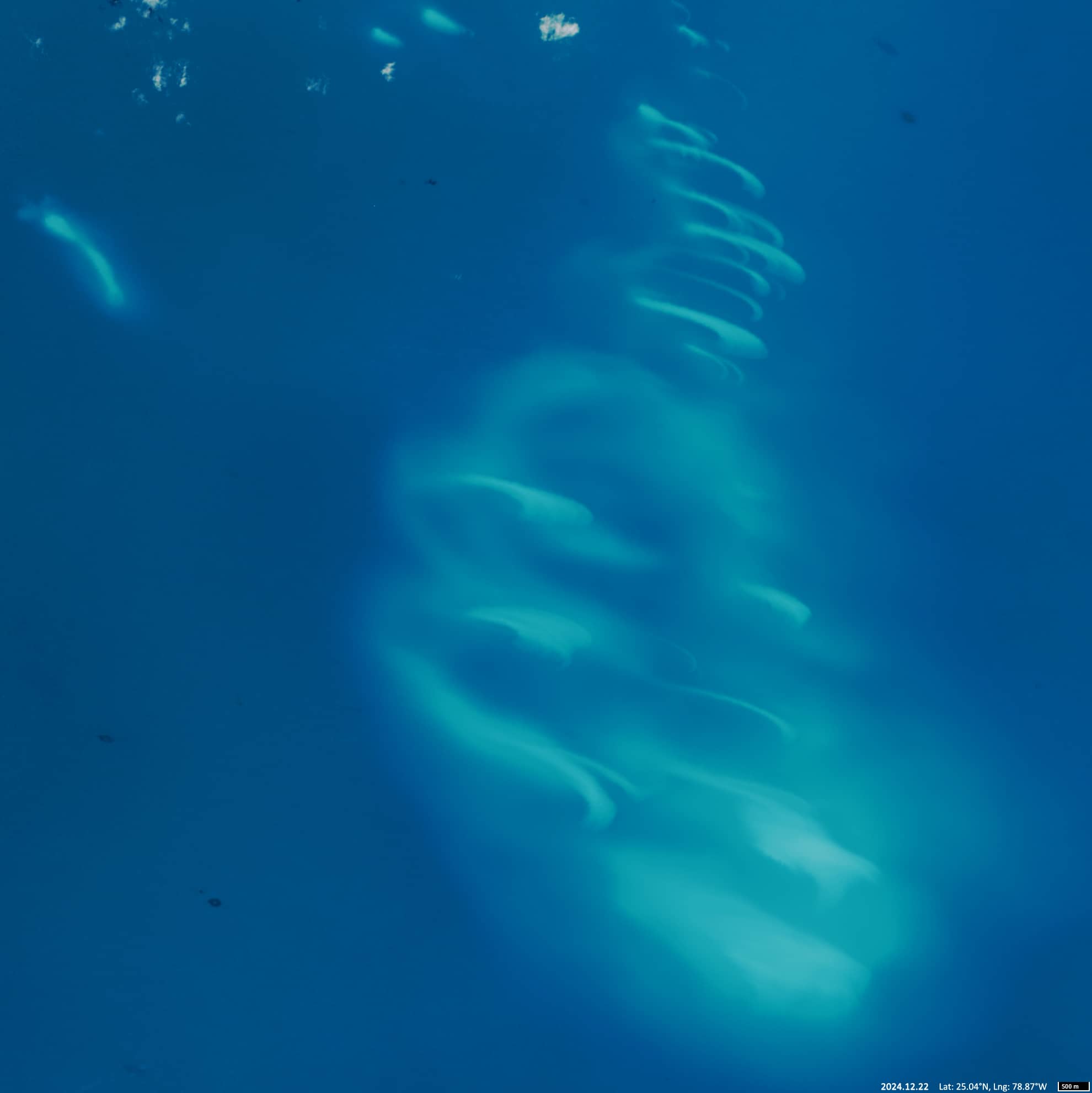
Fig. 5
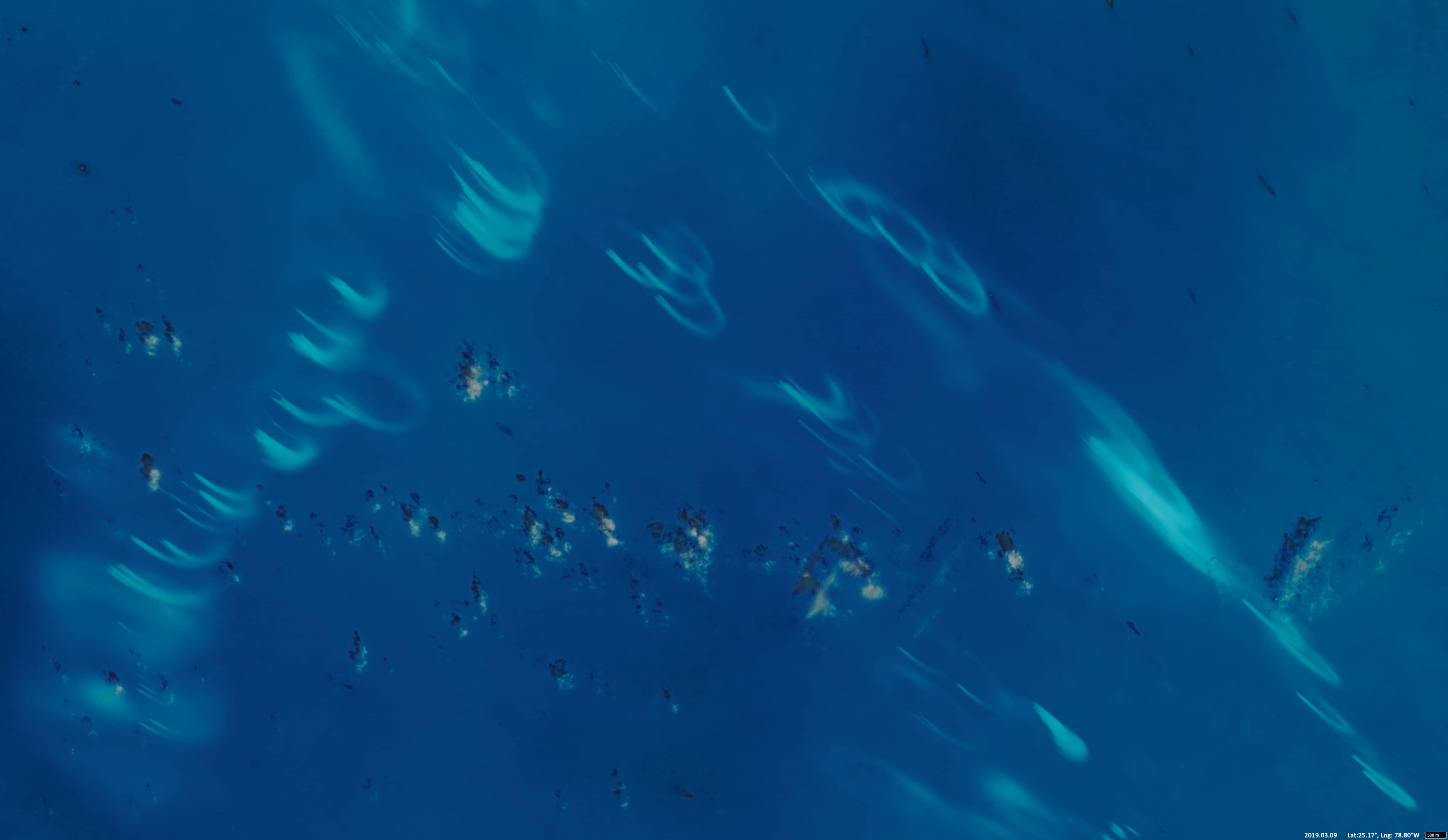
Fig. 6
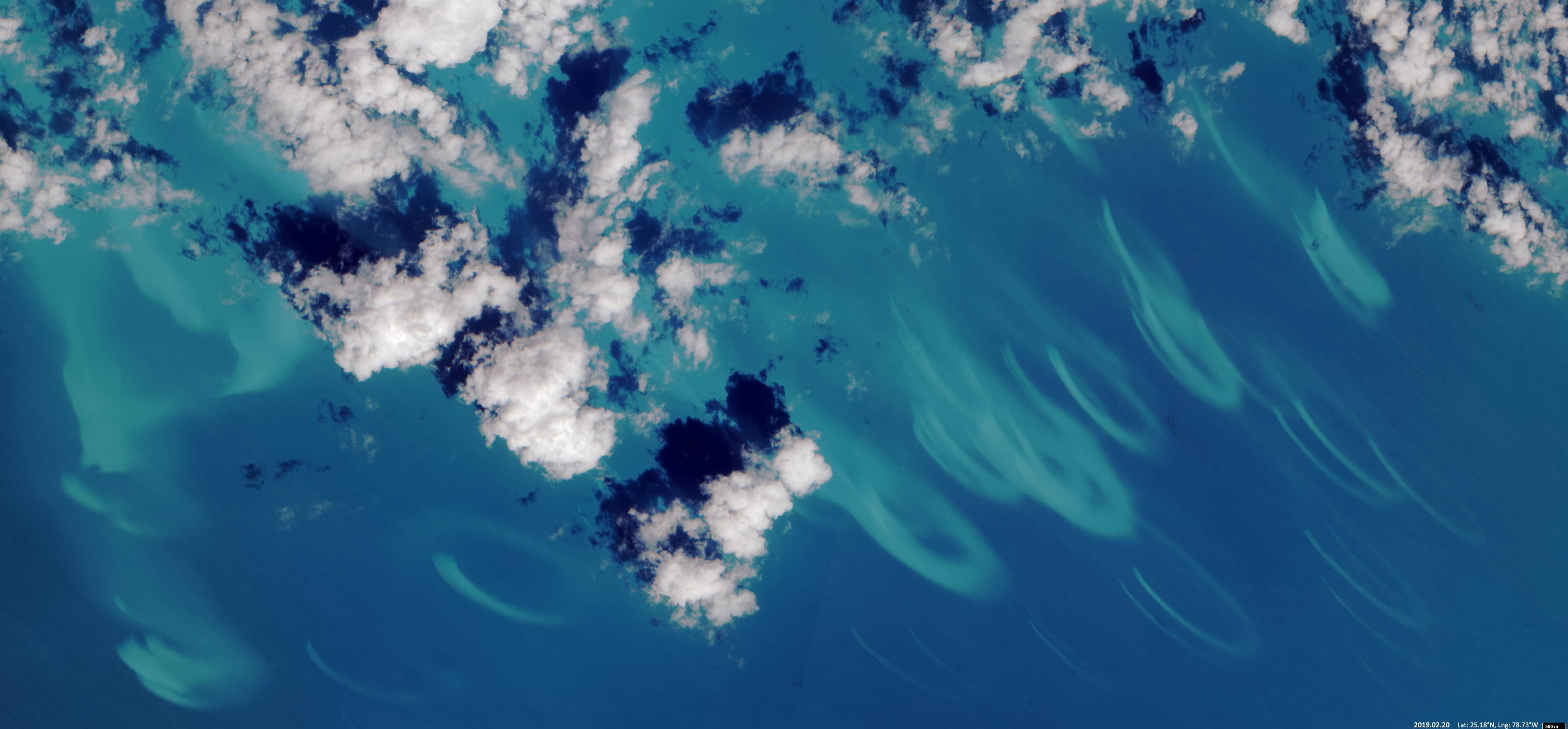
Fig. 7
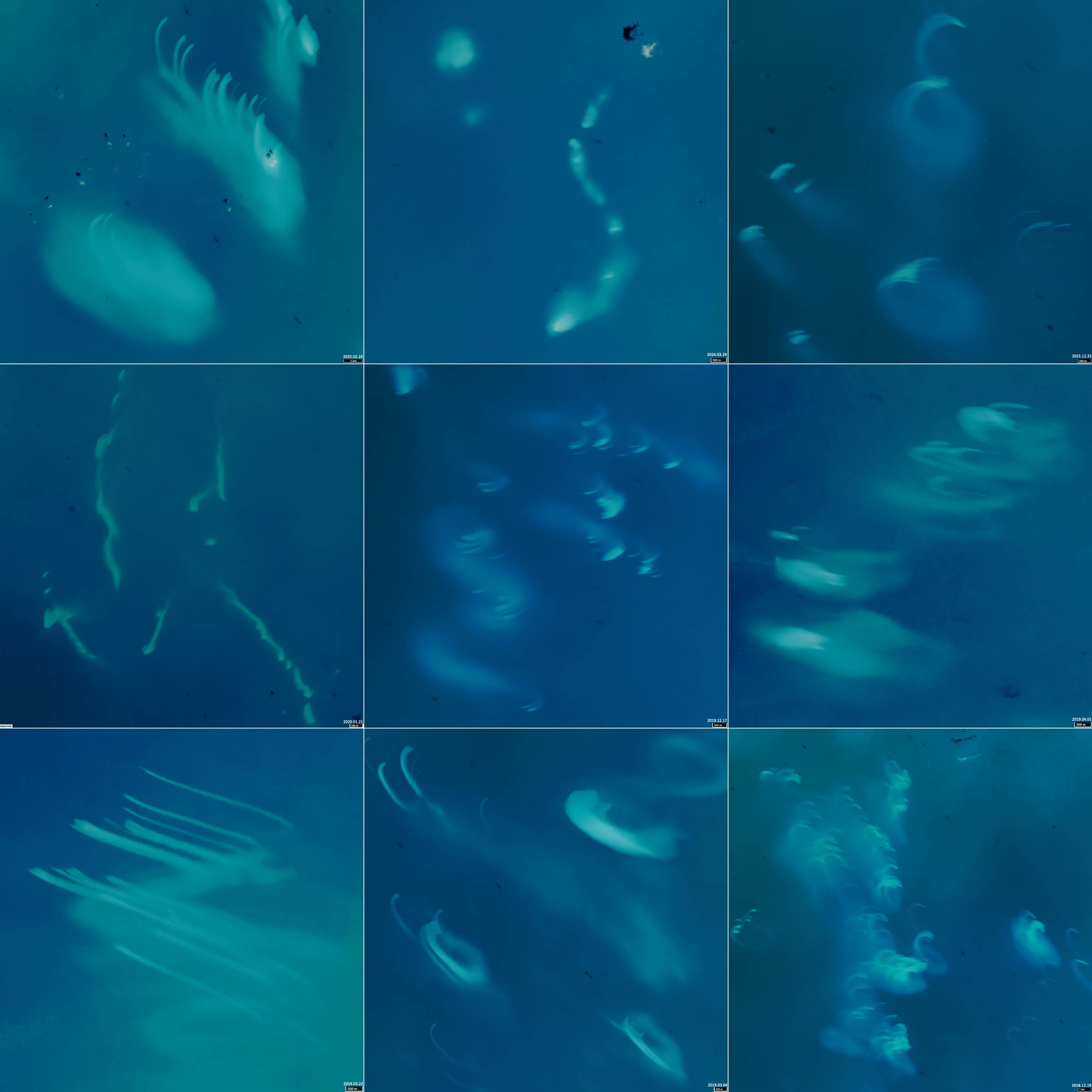
Fig. 8
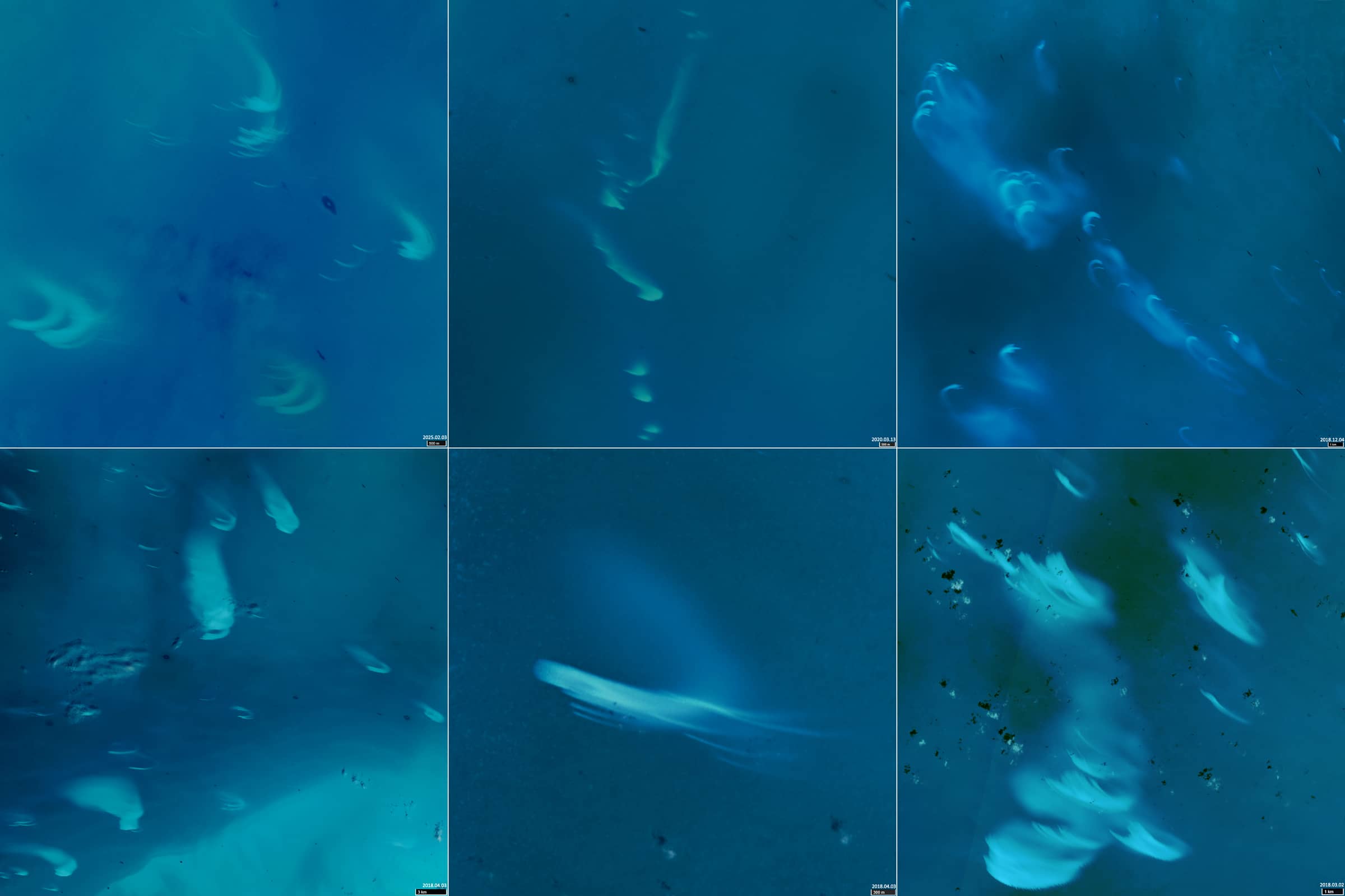
Fig. 9-1
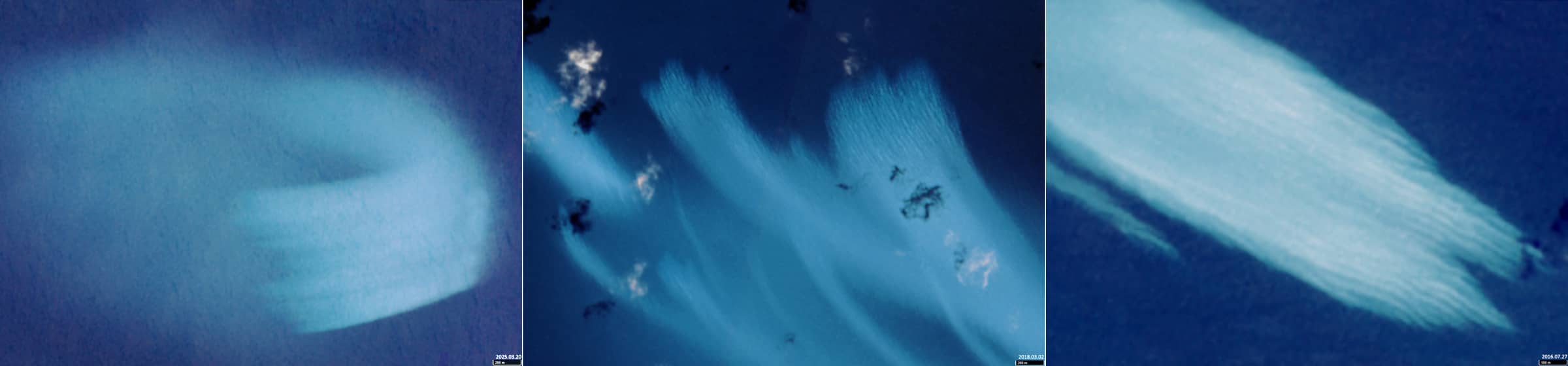
Fig. 9-2
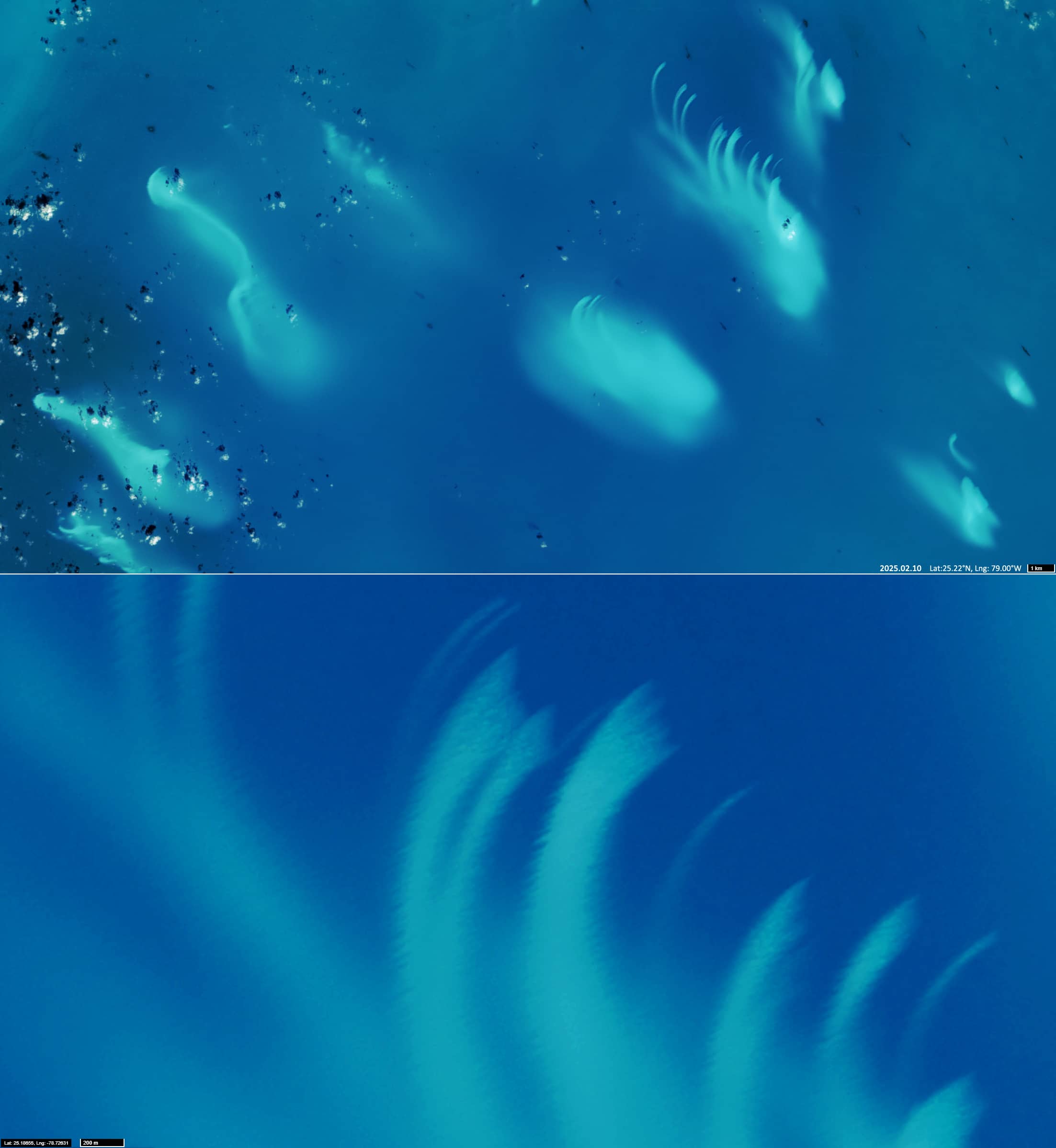
Fig. 10
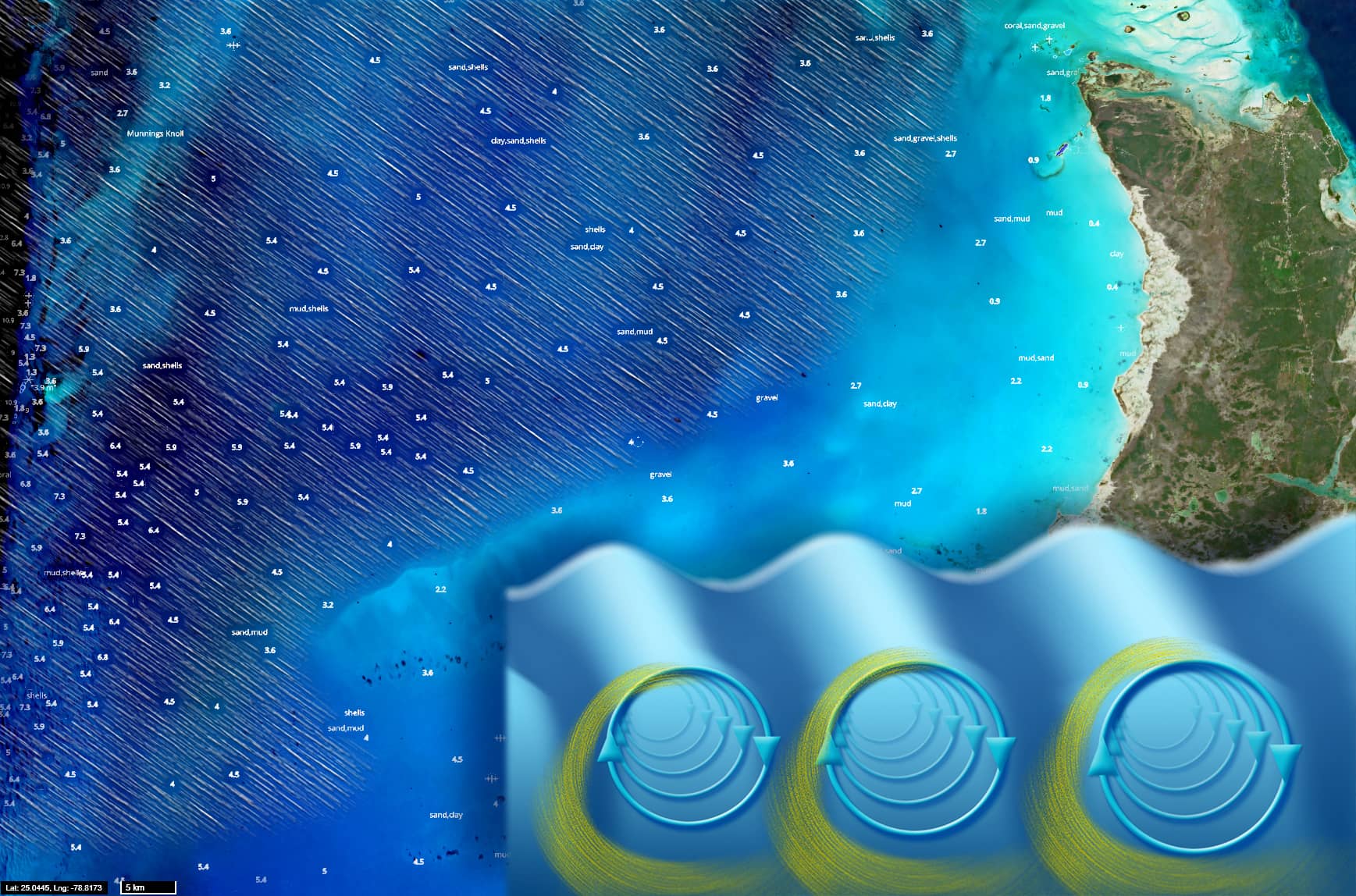
Fig. 11
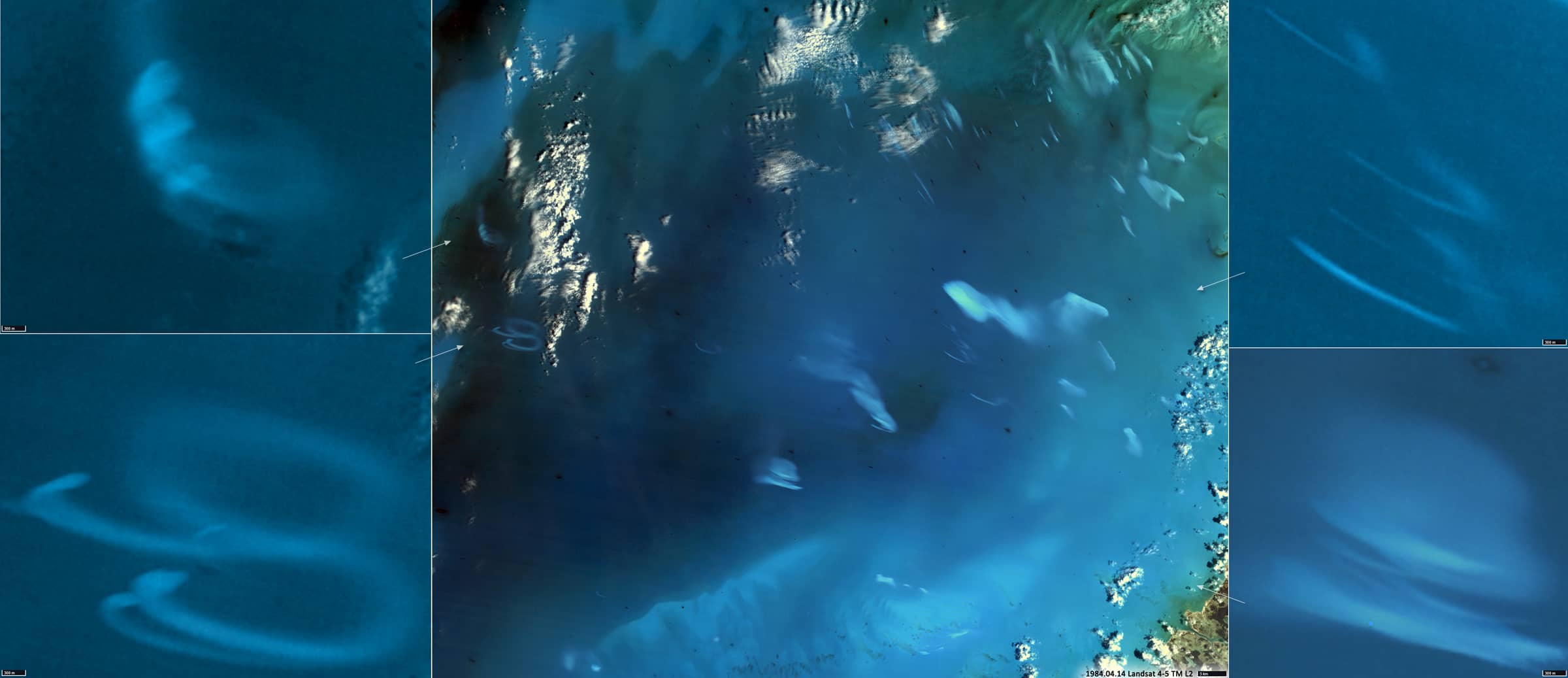
Fig. 12