
Severnaya Zemlya Glaciers
Arctic Ocean | Northern Russia
Date of acquisition: August 7th, 2025 | 08:16:21 UTC
Sensors: Sentinel-2C L2A
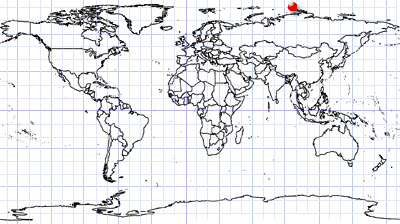
Coordinates: ca. 79.5°N, 97.25°E
Severnaya Zemlya (known as Emperor Nicholas II Land until 1926) is a Russian archipelago located in the Arctic Ocean, to the north of the Taimyr Peninsula. It lies on the border between the Kara Sea and the Laptev Sea. The archipelago consists of four large islands and over a hundred smaller ones.
The archipelago was discovered in 1913 by B. Vilkitsky’s polar expedition. However, there is evidence that Russian hunters and fishermen who lived on the northern coasts visited these islands as early as the 14th century.
The Severnaya Zemlya archipelago was thoroughly explored in the 1930s.
The archipelago covers an area of approximately 37,000 square kilometers. There are around 30 glaciers and ice caps in total, ranging from the largest, the 5,570 km² Academy of Sciences Glacier, to smaller, unnamed ice caps covering less than one square kilometre (Figure 1).
Severnaya Zemlya is the only archipelago discovered in the 20th century and the last large land mass to be mapped. There is no permanent population on the archipelago.
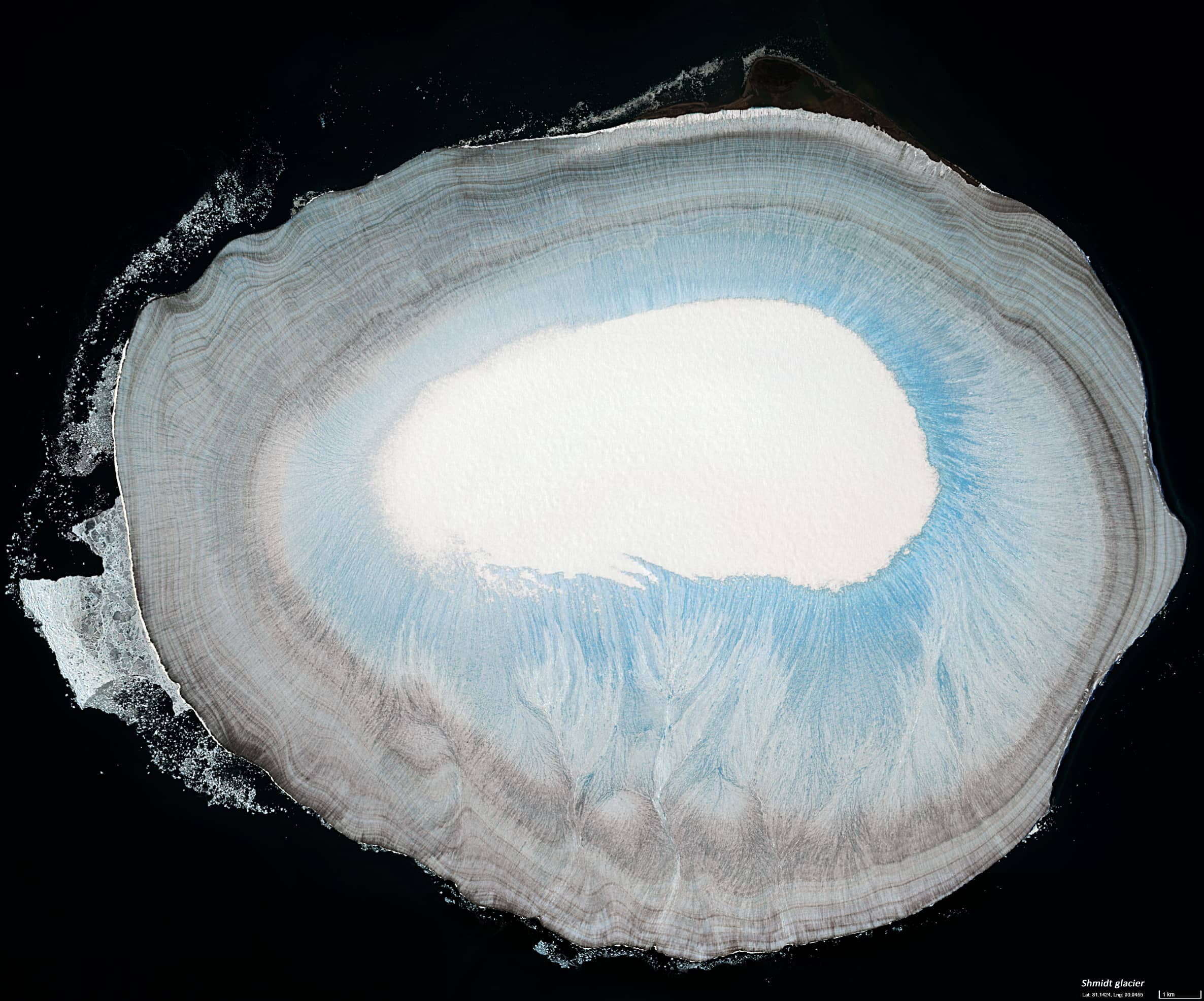
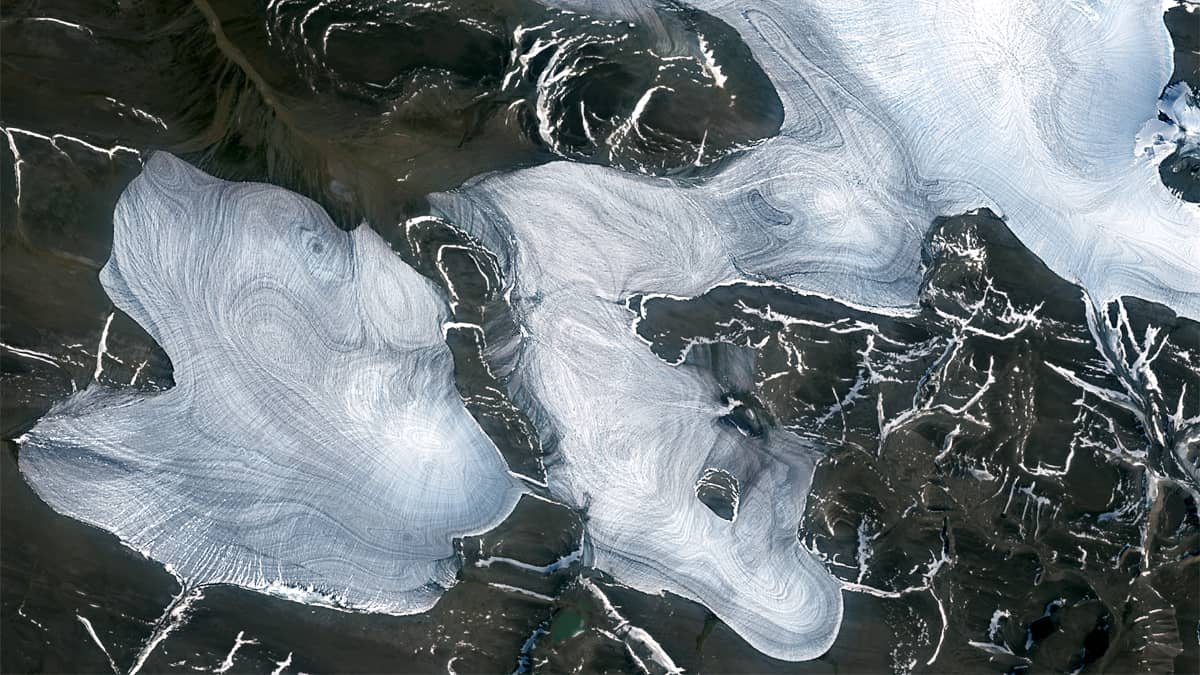
We present here a series of images of medium-sized glaciers, ranging in area from 80 km² to 320 km², which have both educational and aesthetic value (Figures 2–10).
When a glacier is relatively small, the snow melts unevenly from its surface, exposing a texture that allows us to study the glacier’s structure and even the history of its development.
Clearly visible, closed, dark bands of varying thickness can be seen on the surface in the shapes of circles, ovals, and winding closed lines. When viewed from above, they resemble the cut surface of agates.
Each closed band indicates the presence of an ice layer that formed at approximately the same elevation over a single, continuous period of time, lasting from several months to a few years. The dark colour indicates the presence of dust, dirt, and other solids that fell with the snow in the layer.
By observing such bands in different glaciers, it is possible to establish an approximate chronostratigraphy of the ice layers and historical trends in atmospheric aerosol content over hundreds, thousands, and even tens of thousands of years.
Further reading
Severnaya Zemlya (Wikipedia)
List of glaciers in Russia (Wikipedia)
Severnaya Zemlya Glacier Change, Russia (From a Glaciers Perspective)
Fig. 1: Severnaya Zemlya Archipelago ⇓
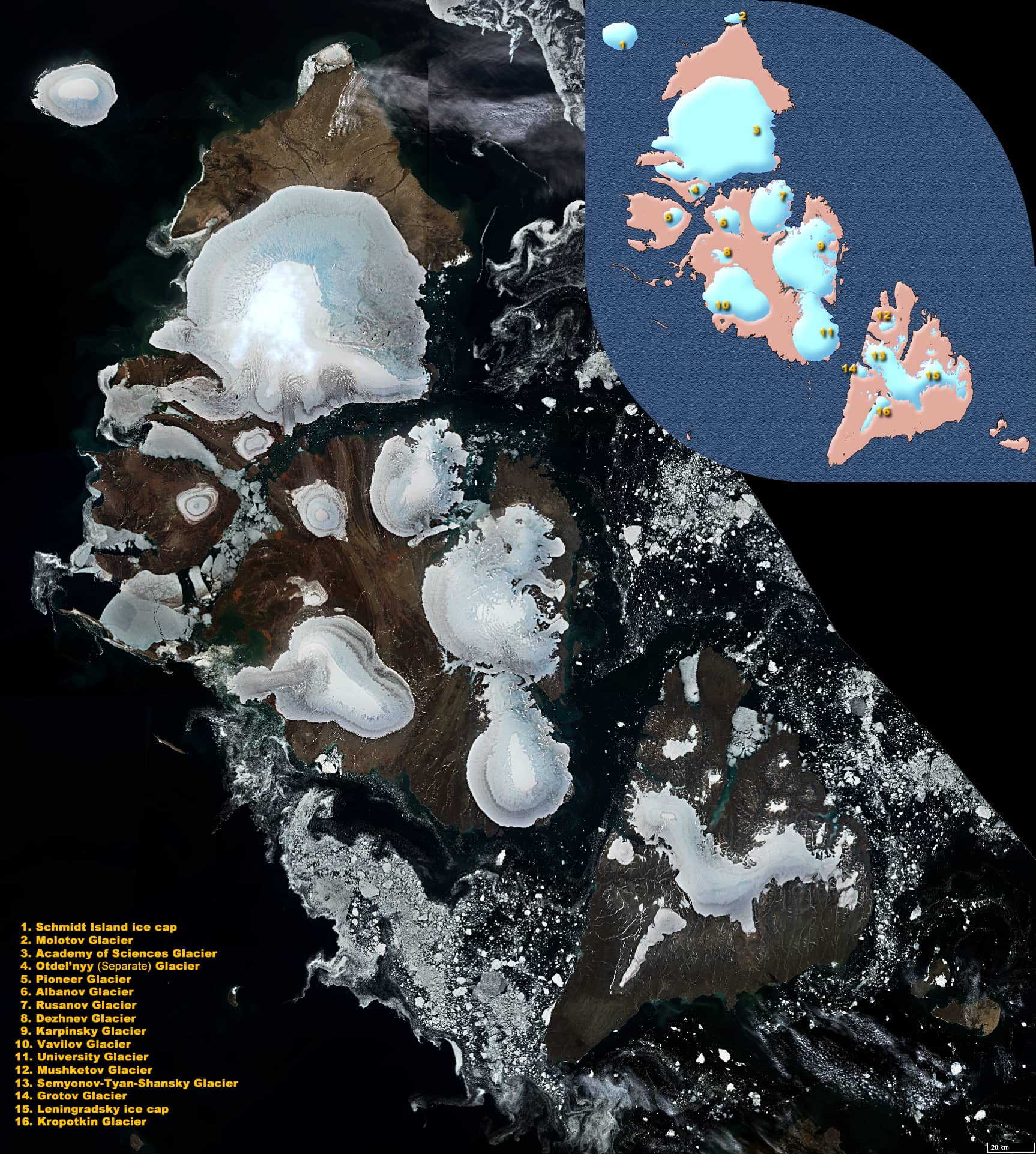
Fig. 2: Albanov Glacier ⇓
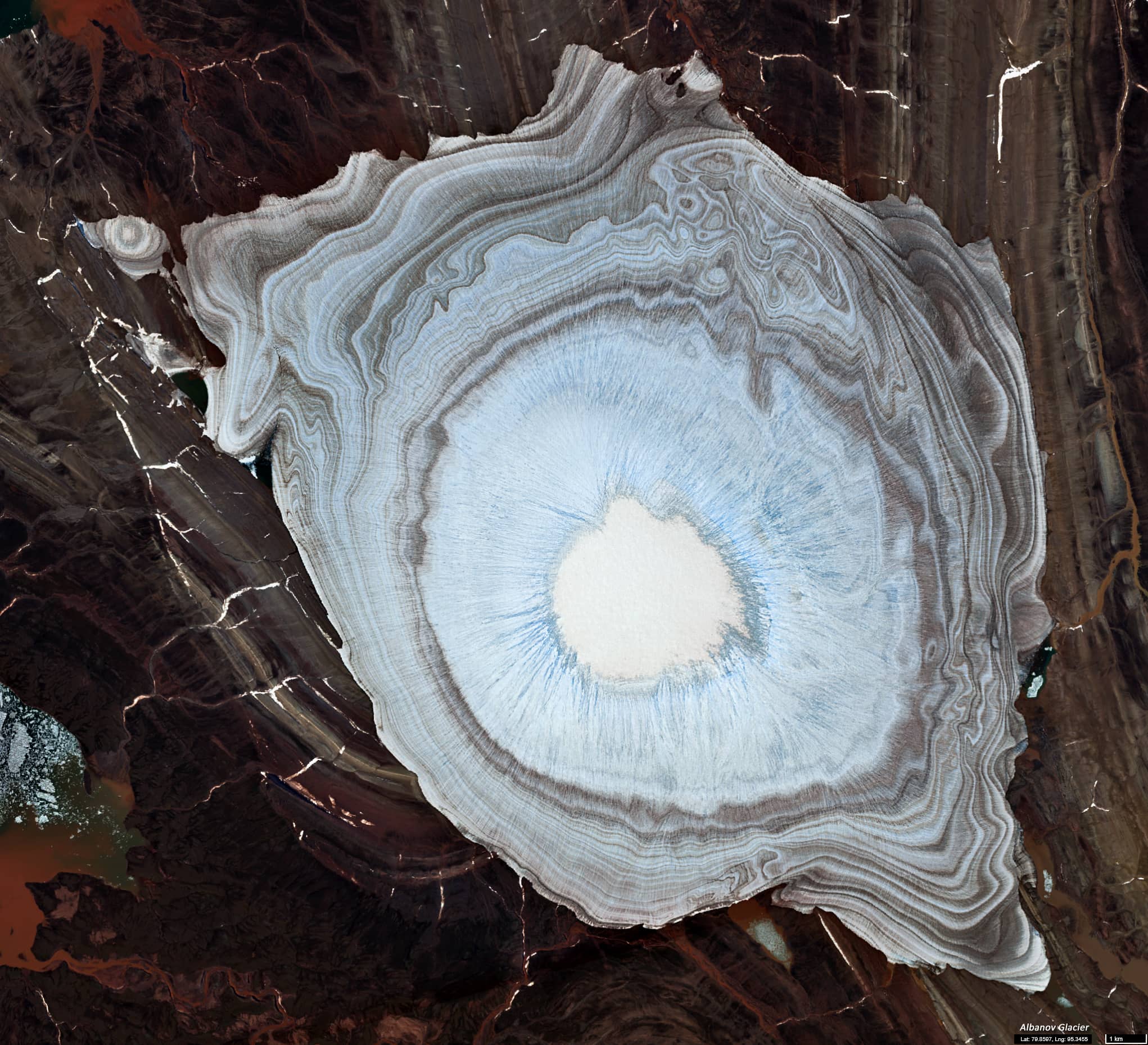
Fig. 3: Dezhnev Glacier ⇓
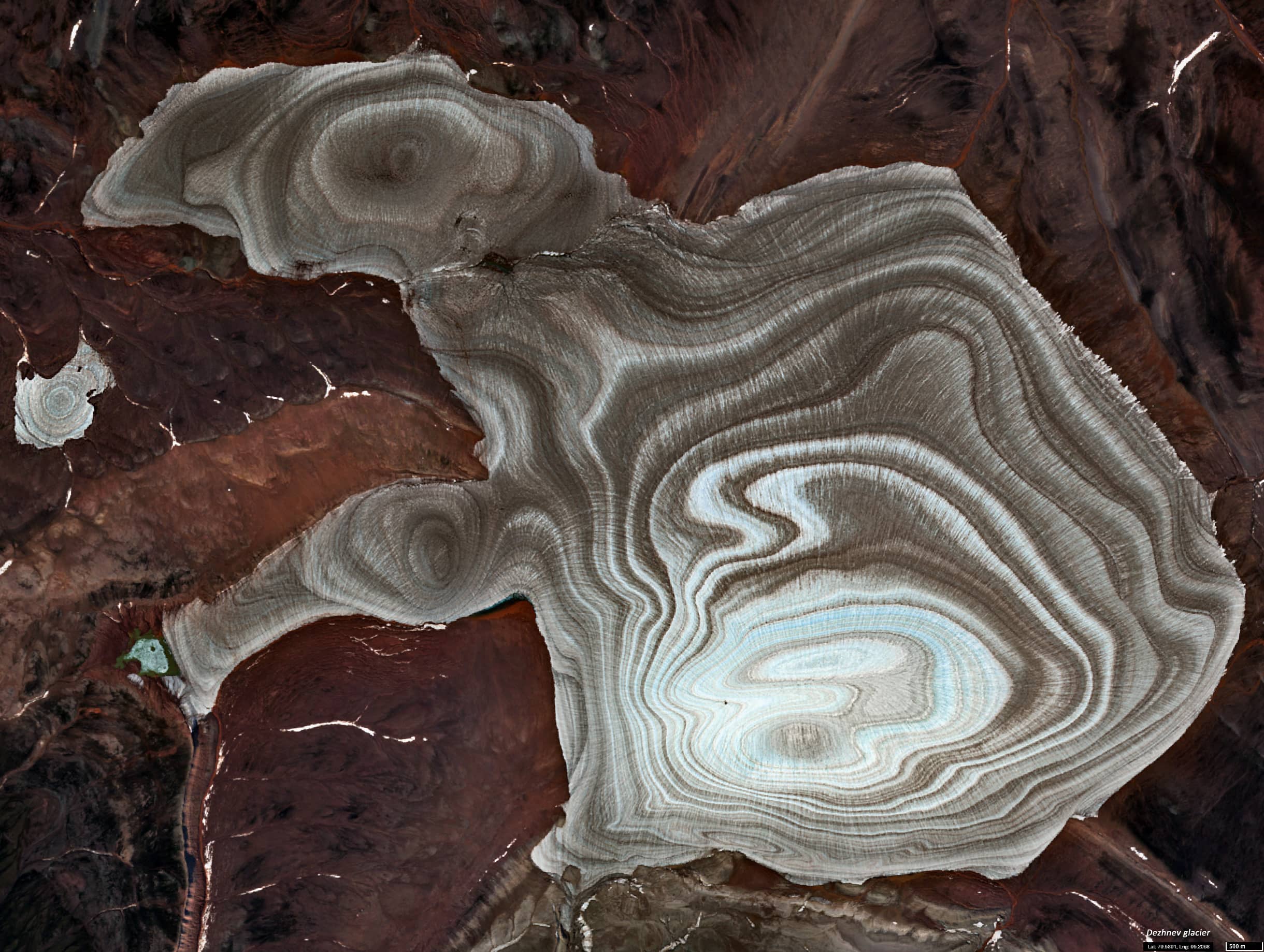
Fig. 4: Grotov Glacier ⇓
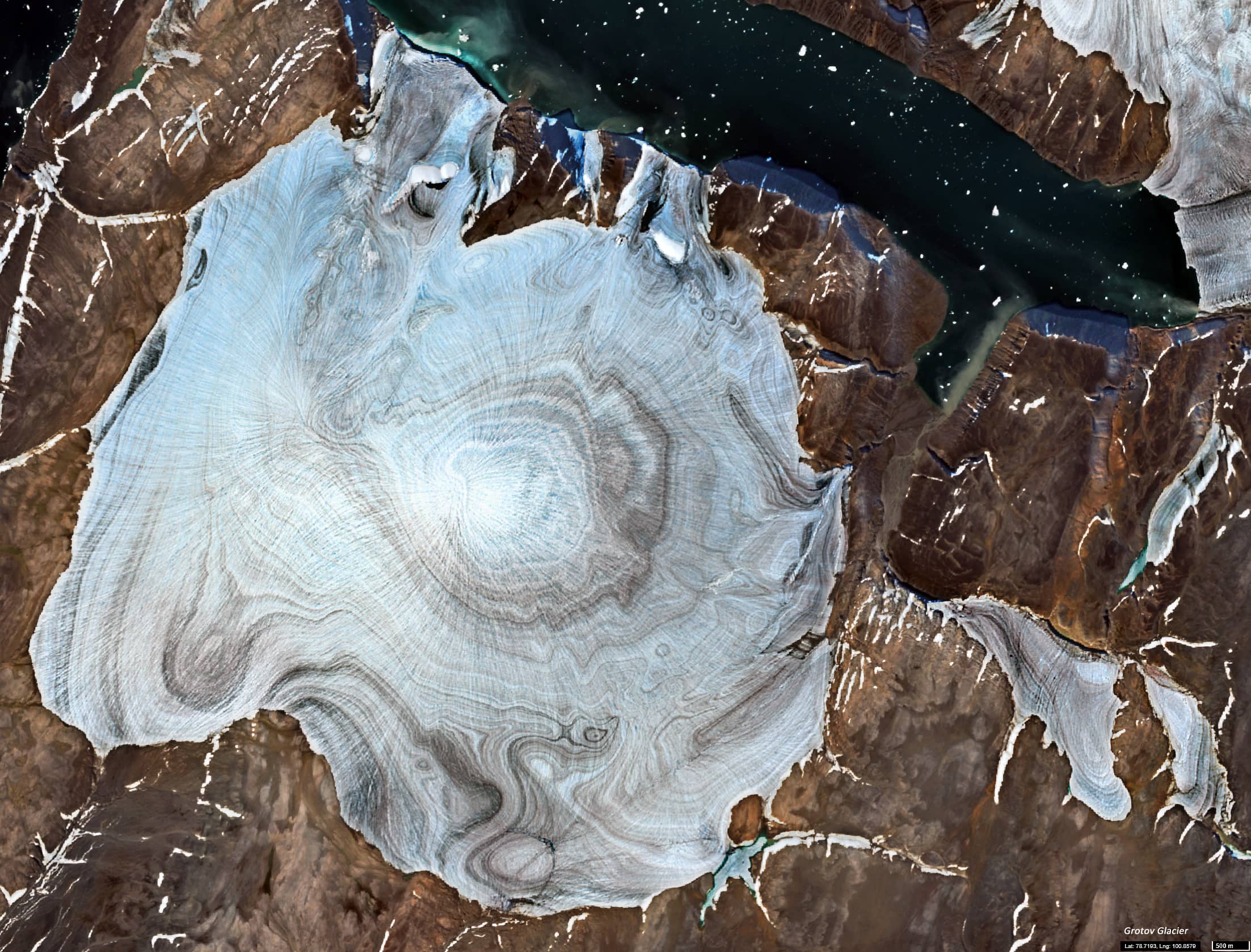
Fig. 5: Kropotkin Glacier ⇓
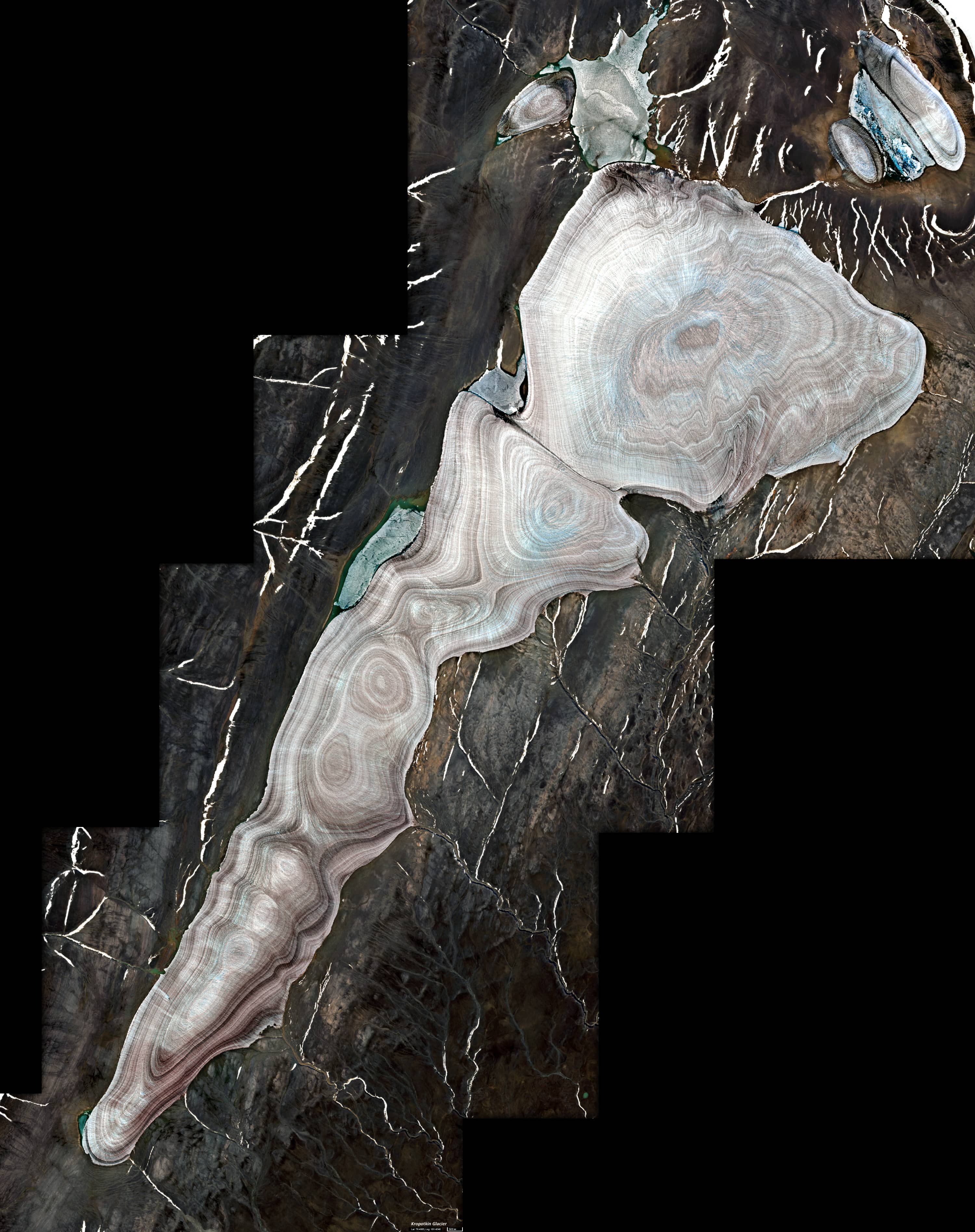
Fig. 6: Molotov Glacier ⇓
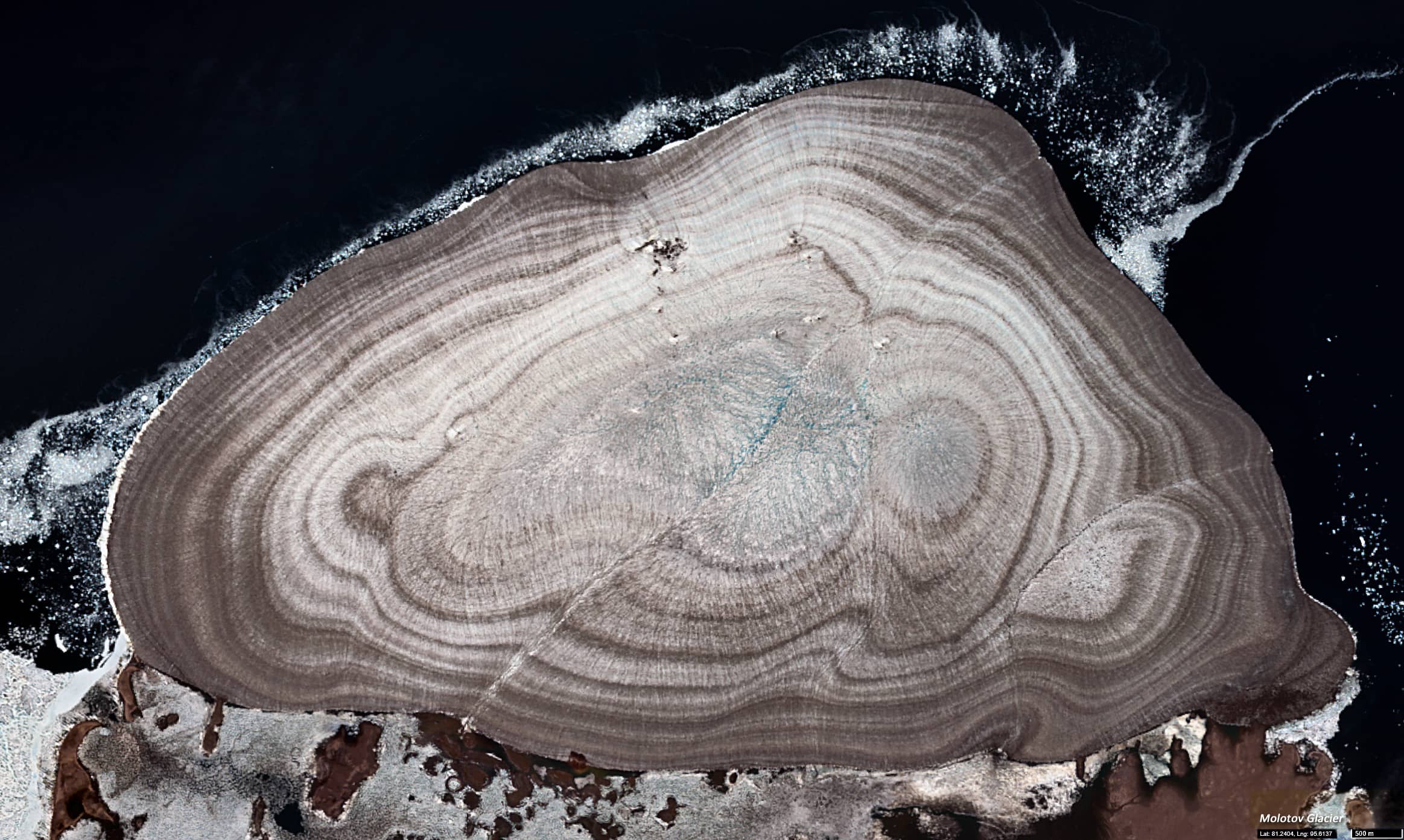
Fig. 7: Mushketov Glacier ⇓
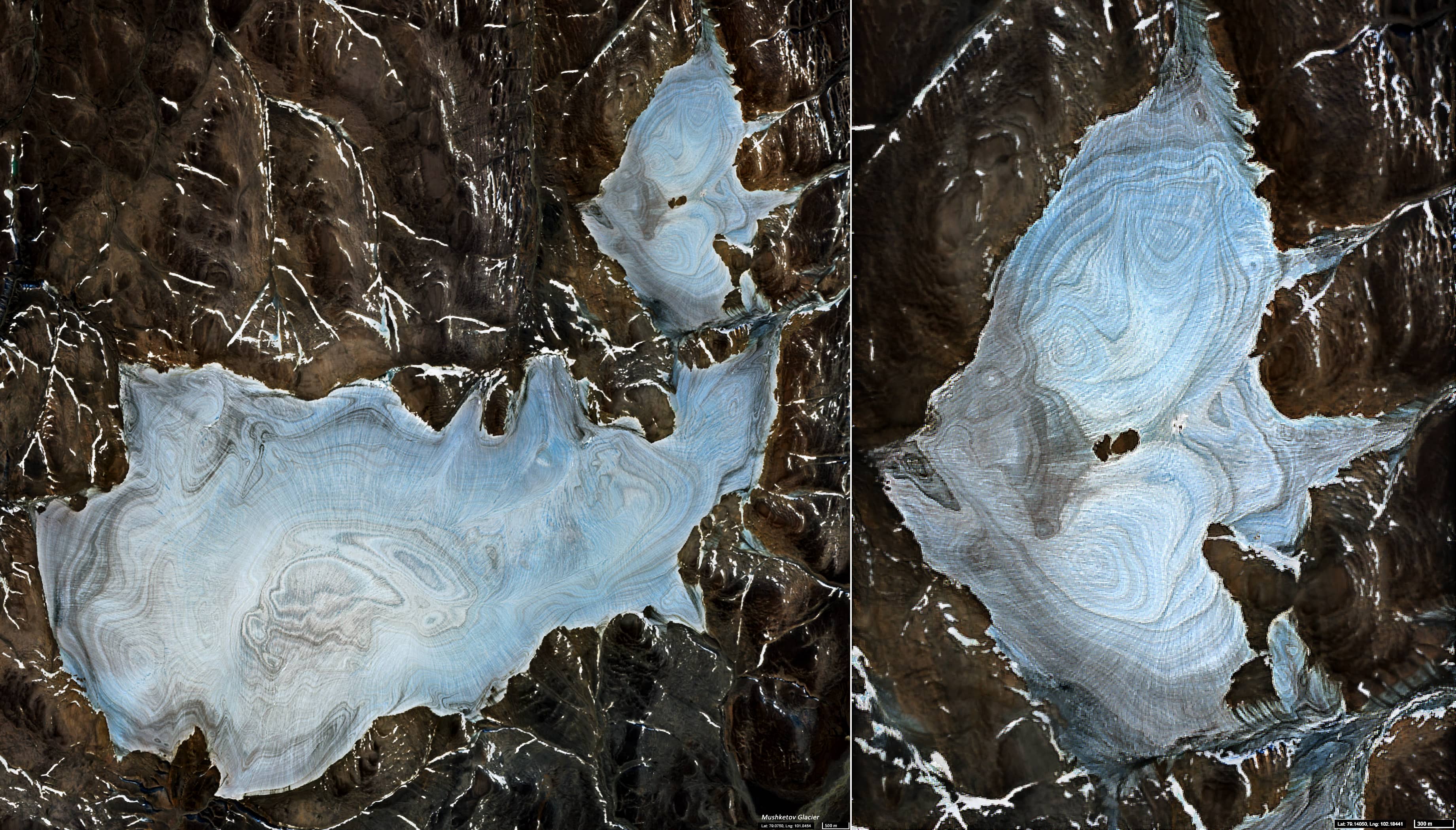
Fig. 8: Otdel’nyy Glacier ⇓
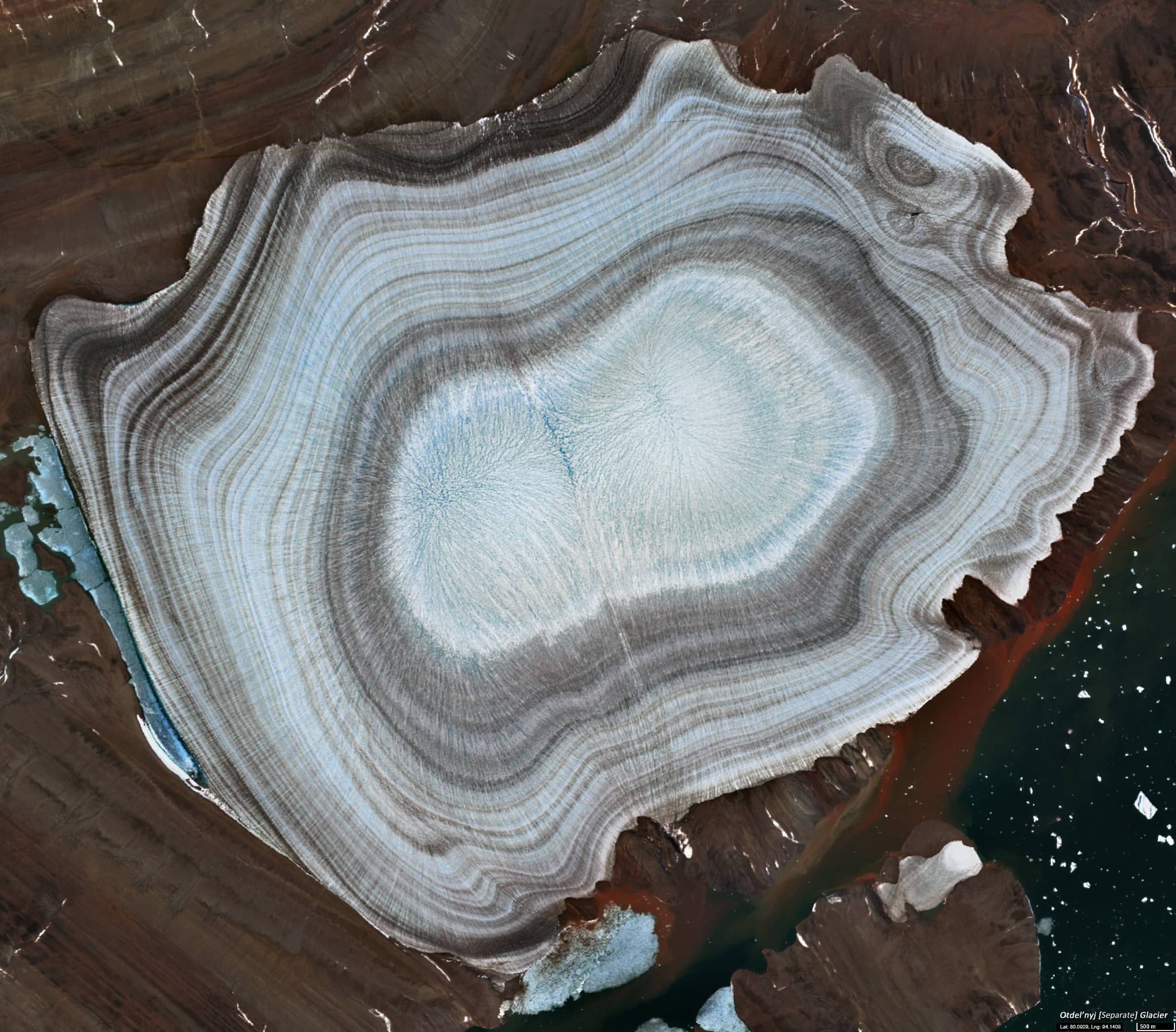
Fig. 9: Pioneer Glacier ⇓
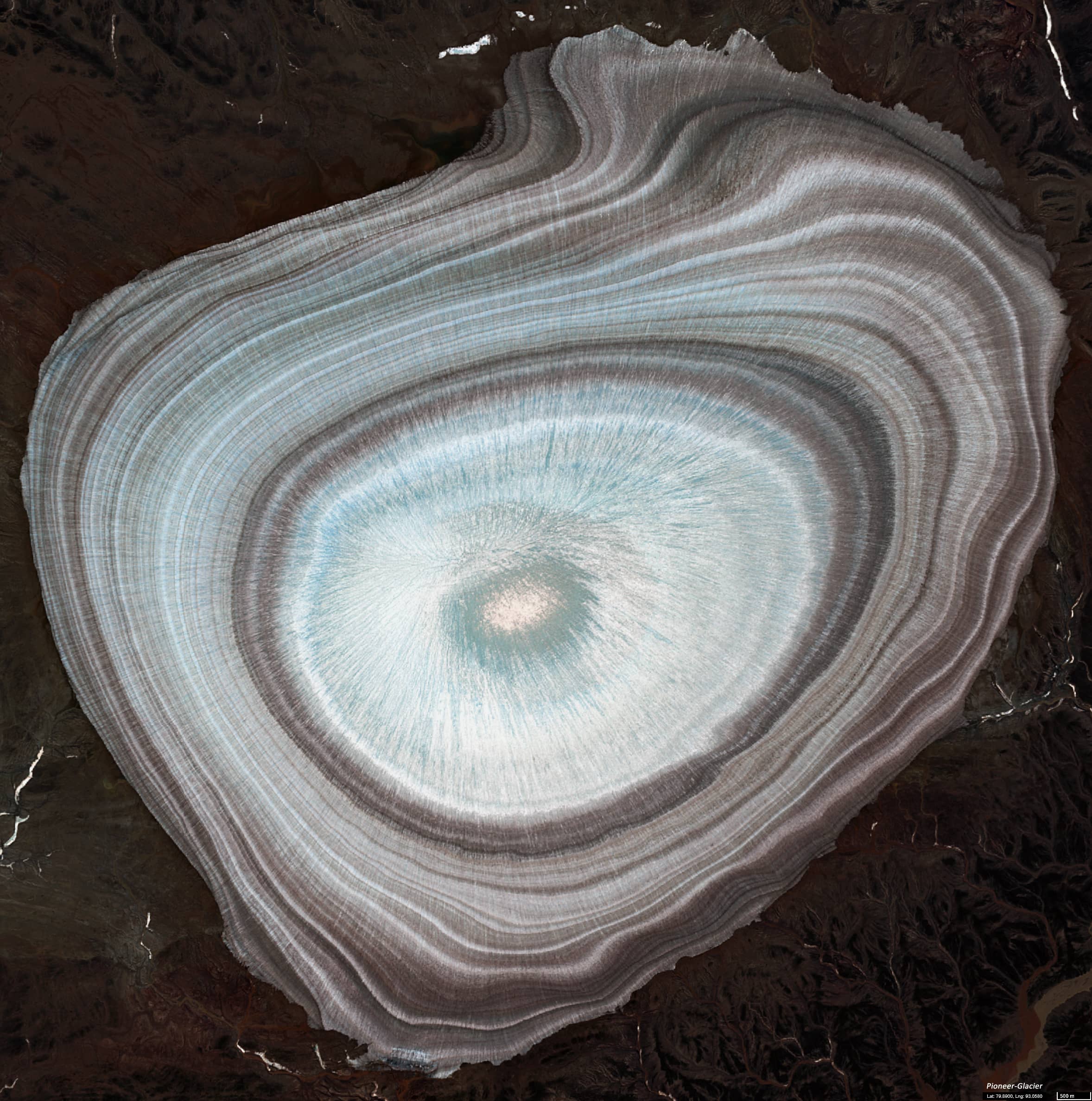
Fig. 10: Shmidt Glacier ⇓