
Sea ice in the Mikkelsen Bay
West coast of Graham Land | Antarctica
Date of acquisition: October 12th, 2025 | 13:29:19 UTC
Sensor: Sentinel-2B L2A
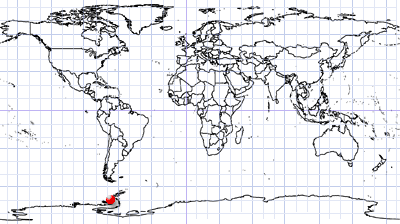
Coordinates: ca. 68.61°S, 67.18°W
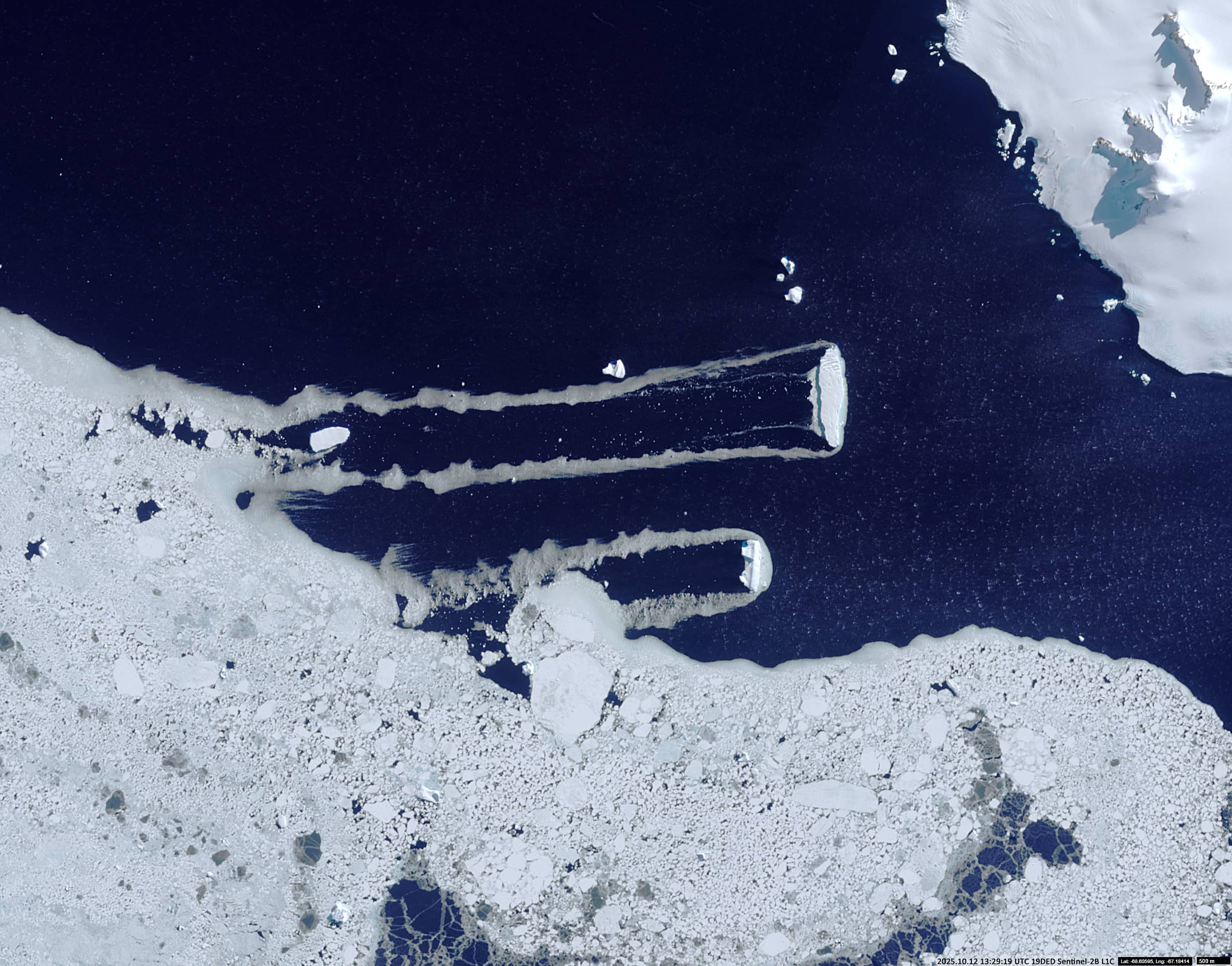
A small, unnamed, elongated tabular iceberg, measuring approximately 1.4 kilometres in length and between 180 and 360 metres in width, with an estimated area of around 0.35 square kilometres, was located on the continental shelf in Marguerite Bay, off the coast of the Antarctic Peninsula. It was located about 1.8-1.9 nautical miles from Moraine Cove, a small cove at the northern end of Mikkelsen Bay, on the west coast of Graham Land. We will refer to this iceberg as MIK-1 here. A second, smaller iceberg, located about one nautical mile south-southwest (hereafter referred to as MIK-2), had also run aground.
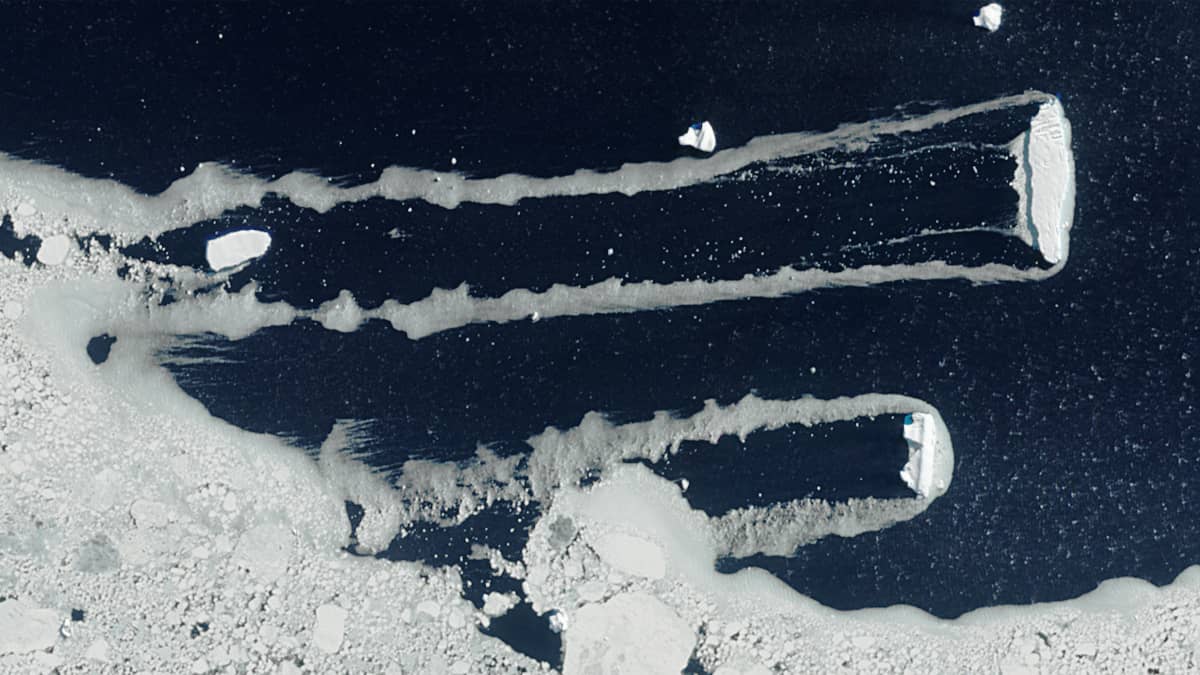
Sentinel-2 satellite imagery revealed an interesting situation in which drift ice – a collection of small floating ice fragments – being driven westward out of Mikkelsen Bay by wind and ocean currents. This flowed around the edges of the two grounded icebergs, creating the impression that they were moving rapidly eastwards.
On closer inspection, the shadow of the iceberg MIK-1 can be seen to the left. Based on the position of the sun when the image was taken, the freeboard of the iceberg can be estimated to be around 7-10 metres. Assuming that 10-15% of an iceberg’s total volume is above the waterline, the local water depth can be estimated to be around 75±10 metres.
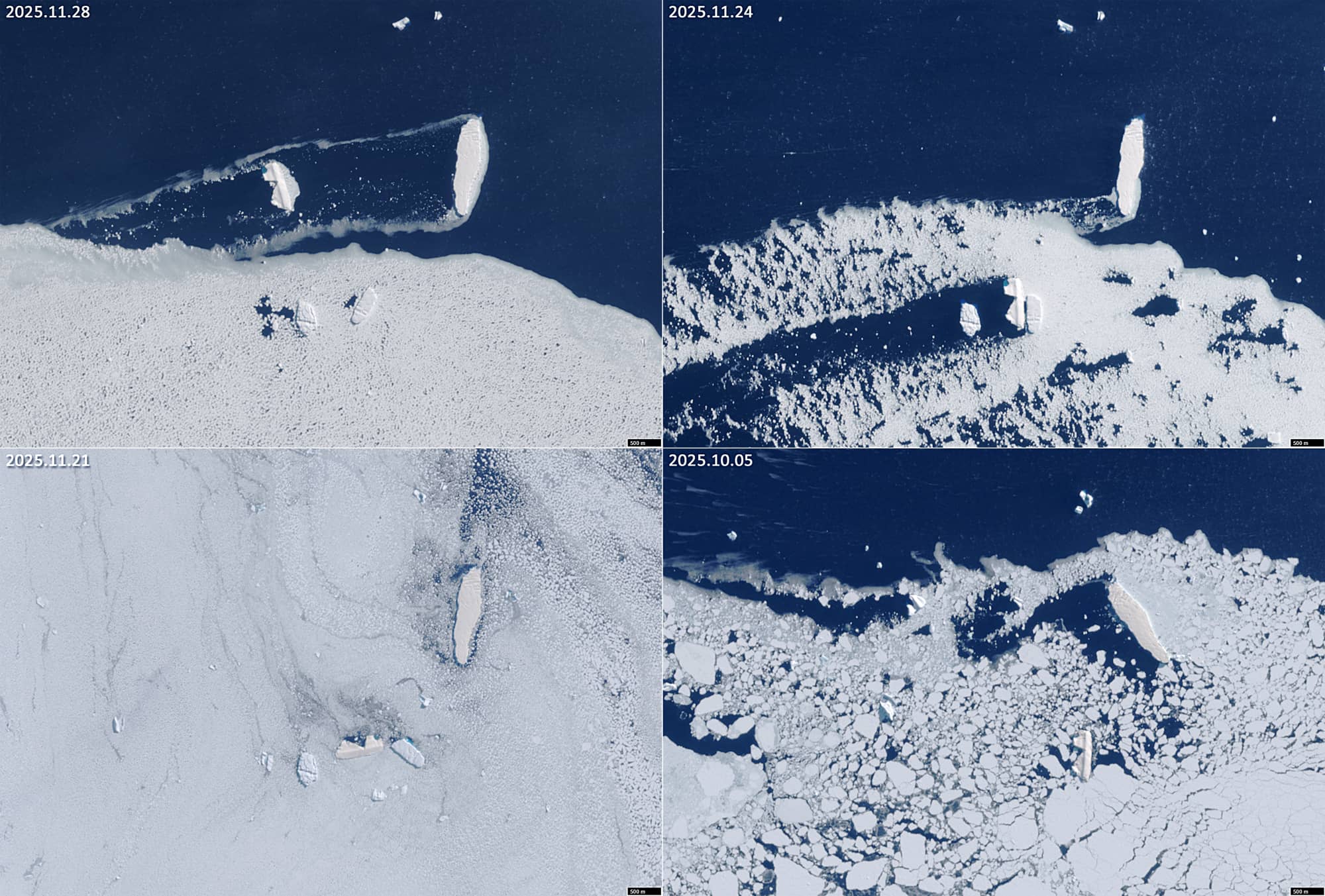
Figure 2 shows examples of ice conditions in the Mikkelsen Bay, as well as the situation after MIK-2 moved into the lee of its larger neighbour.
The origin of the icebergs in the bay is of interest. However, the origin of MIK-2 could not be determined.
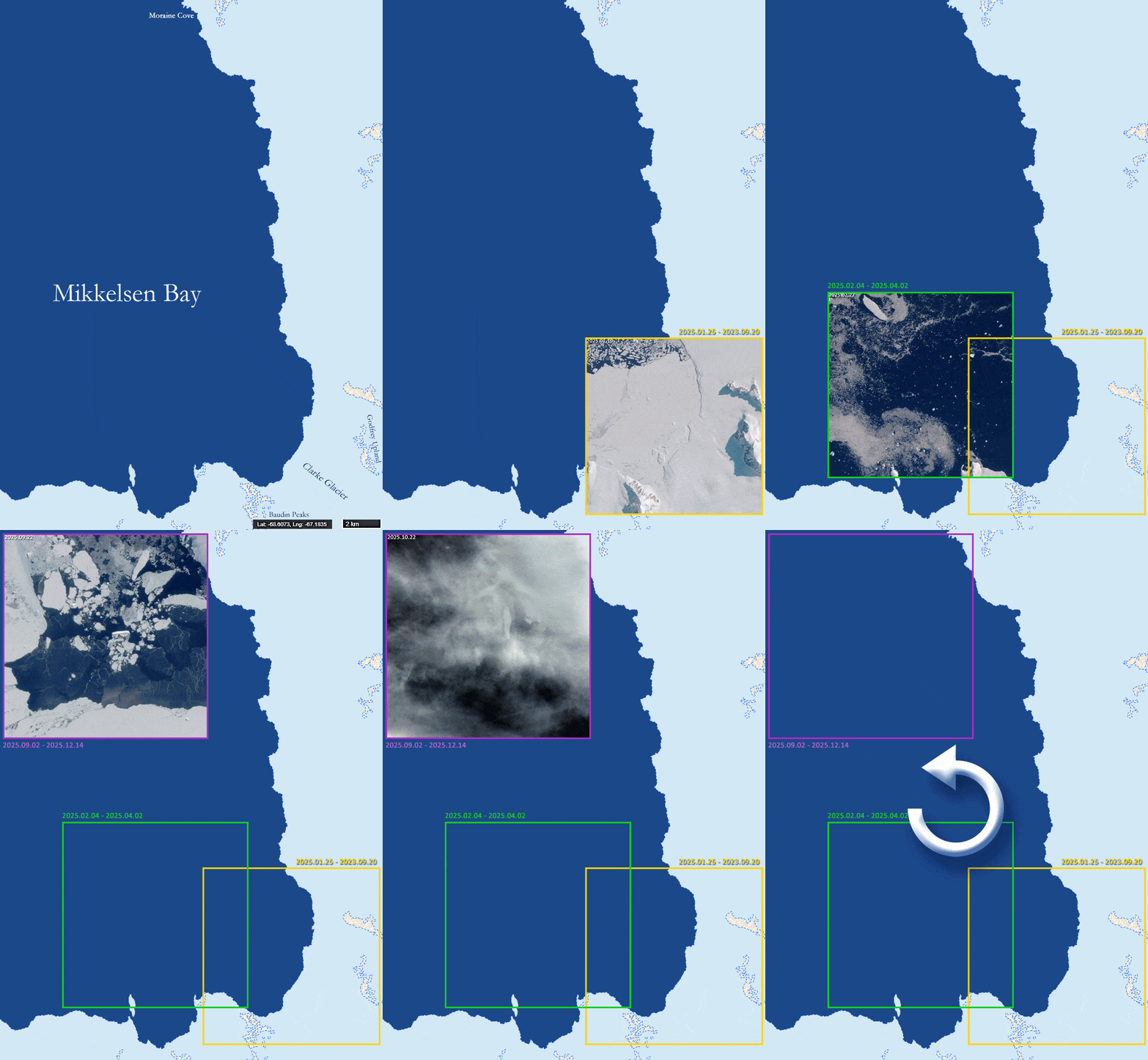
In contrast, the source of MIK-1 was successfully identified. Figure 3 (an animation) shows the positions of MIK-1 over a period of more than two years.
MIK-1 originated from the relatively small Clarke Glacier, which is about 3.7 km wide and 37 km long It flows westward into Mikkelsen Bay along the northern slope of Mount Sickle and Boden Peaks. MIK-1 calved from the Clarke Glacier in December 2023, remaining near the glacier front until mid-January 2025, before drifting into the bay. In January 2026, the iceberg left the study area and moved north.
Further reading
Marguerite Bay (Wikipedia)
Cape Berteaux (Wikipedia)
Moraine Cove (Wikipedia, German)